
The label on the board decides the air in the room. Here is what E1 actually promises, what it doesn't, and how to read it before the carpentry arrives.
There is a smell every Singaporean knows — the sharp, slightly sweet edge of a freshly renovated flat. New cabinets, new wardrobe, new everything. Most people call it the "new renovation smell" and open the windows for a week. The smell has a name. It is formaldehyde, and the board your carpenter chose decided how much of it you and your family will breathe for the next several years.
E1 is the standard that governs this. It appears in nearly every cabinetry quote in Singapore — "E1 board," "E1-grade melamine," "E1 certified." This is what those two characters actually mean for the air in your home.
E1 formaldehyde emissions — the standard, in plain terms
Almost all modern cabinetry is built from engineered board — particleboard, MDF, or plywood — held together with resin adhesives. Those resins release small amounts of formaldehyde gas over time, a process called off-gassing. It is strongest in the first months after installation and tapers slowly over years.
E1 is a European emission classification. A board certified E1 must release no more than roughly 0.1 parts per million of formaldehyde under standardised test conditions. That is the level at which most people detect no odour and at which health authorities consider long-term exposure acceptable for living spaces.
The grades above and below matter too. E2 board emits several times more and is no longer acceptable for interior cabinetry in most developed markets. E0 and Super E0 sit below E1, with emissions approaching those of natural wood. The direction of the industry is downward — quieter boards, cleaner air.
Why this matters more in Singapore than in Stockholm
Formaldehyde off-gassing is not constant. It rises with heat and with humidity — and Singapore supplies both, every day of the year. A board that tests comfortably in a European laboratory at 23 degrees and 45% humidity will off-gas measurably more in a Tampines flat at 31 degrees and 85% humidity, with the windows closed and the air-conditioning recirculating.
This is why the standard you accept matters more here than almost anywhere else. The same E2 wardrobe that would be merely unpleasant in a cool climate becomes a long-term presence in a tropical bedroom — particularly one where the door stays shut and the compressor hums through the night.
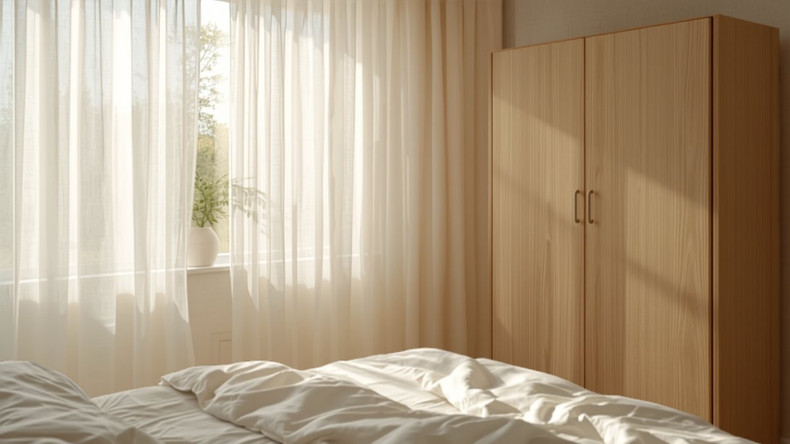
It is also why the rooms matter. The bedroom wardrobe sits two metres from where you sleep, eight hours a night. The kitchen cabinets warm up beside the hob every evening. These are the pieces where the board grade is not a specification detail. It is the air itself.
What the label promises — and what it doesn't
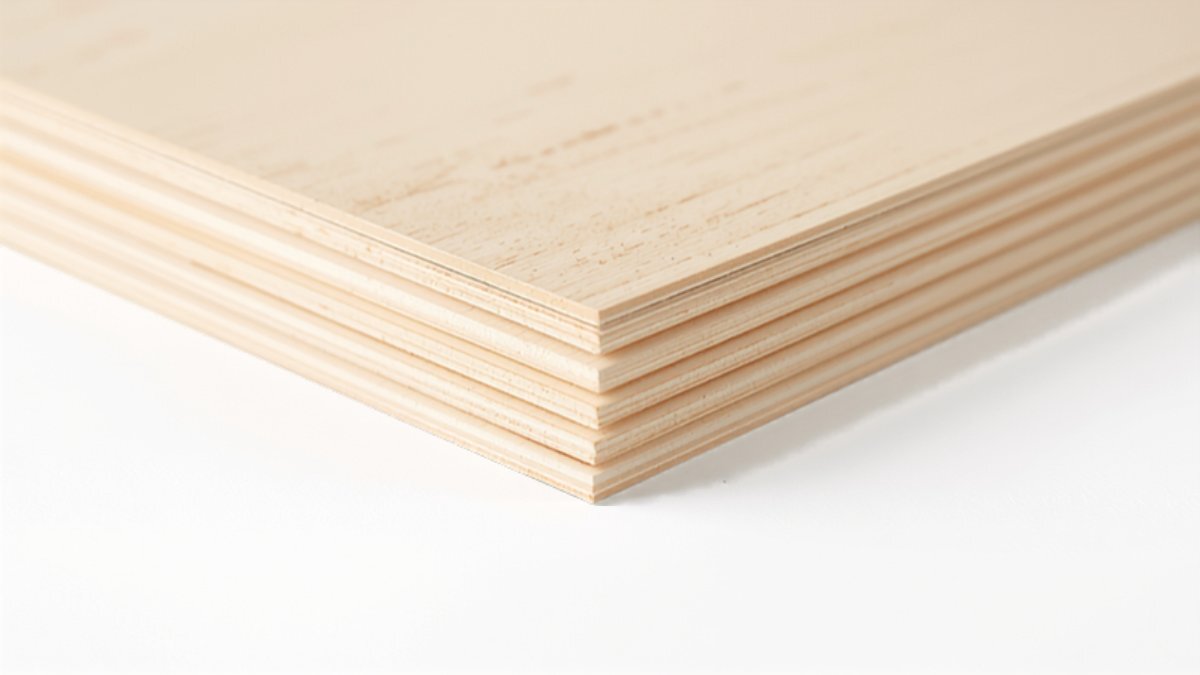
An E1 certificate covers the board as it left the mill. It does not cover everything that happens afterwards, and this is where a careful homeowner asks two more questions.
Edge-banding. Formaldehyde escapes fastest from cut edges. A board properly edge-banded on all six sides — including the edges you will never see, inside the carcass — seals the resin in. A board banded only on the visible edges keeps off-gassing from every hidden cut. When you compare quotes, this is the difference that doesn't show up in the showroom.
Every component, not just the doors. A kitchen is doors, carcasses, shelves, drawer boxes, and back panels. Some workshops quote E1 doors and quietly build the carcass from cheaper board. The standard is only as honest as the least honest panel in the cabinet. Ask for the grade in writing, for every component.
How to read a cabinetry quote, line by line
Three questions settle the matter, and a good workshop will answer all three without hesitation.
One. Which emission grade, and certified by whom? The answer should name the grade — E1 at minimum — and the certification behind it, with mill documentation available on request.
Two. Does the grade apply to the full cabinet? Doors, carcass, shelves, drawer boxes, back panels. One grade, throughout, in writing.
Three. How are the edges sealed? The answer you want is edge-banding on all six sides, including non-visible edges, machine-applied. If the answer is vague, the air in your home is the thing being negotiated.
Where Arimokko stands on this
Arimokko builds with E1-grade board as the floor, not the ceiling — across doors, carcasses, shelves, and drawer boxes alike, edge-banded on all six sides at our Senai factory. Our Mokko Kitchen range is specified this way as standard, because a kitchen cabinet lives beside heat and steam for twenty years, and the board grade is a decision you only get to make once.
We are happy to show the mill certificates. We would rather a client ask than assume — and we would rather lose a quote on price than win one on a board we wouldn't put in our own homes.
The quiet conclusion
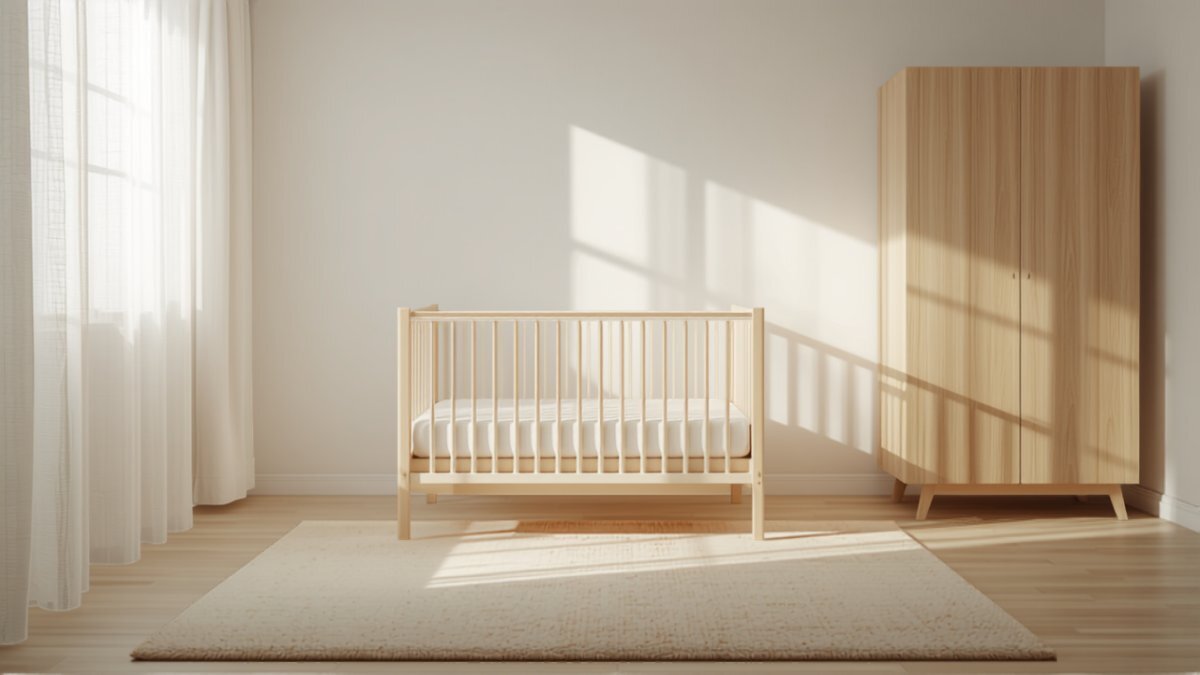
You cannot see board grade in a showroom. The E1 cabinet and the E2 cabinet photograph identically. The difference is in the air of the room three months after handover, when the windows are closed, the air-conditioning is on, and your family is asleep beside the wardrobe.
Ask the three questions. Get the grade in writing. Open the windows for the first weeks anyway — every new fit-out deserves that courtesy. And choose a workshop that treats the air in your home as part of the cabinetry.
Begin a quiet conversation.
Visit our Aperia design office, by appointment. 12 Kallang Avenue, #03-07, Aperia Mall.
WhatsApp +65 8821 1455.