
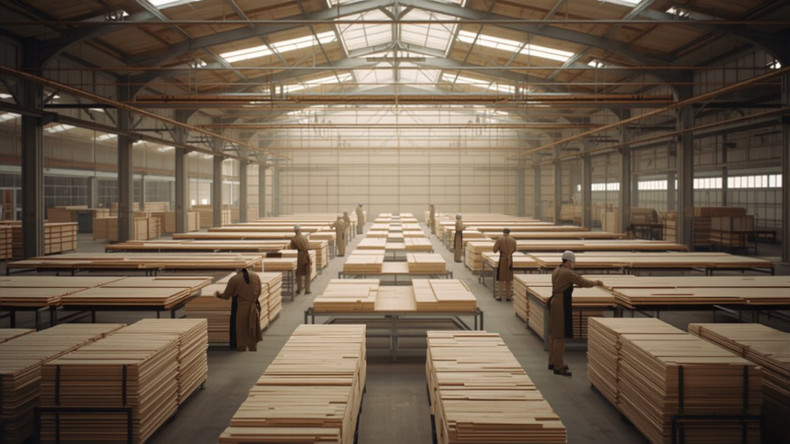
Forty minutes from the Causeway, in an industrial park in Senai, the quiet rooms of Singapore and Malaysia begin as boards on a rack.
At seven in the morning the factory smells of cut timber and warm adhesive, and the loudest thing in the building is the extraction system breathing through the roof. This is where Japandi cabinetry actually comes from — not a showroom, not a mood board, but a 7am production floor at 100 Jalan Sinergi 6, Senai, where the day's boards are already queued at the saw.
Most homeowners never see the factory behind their carpentry. This is a portrait of ours.
Where Japandi cabinetry is decided
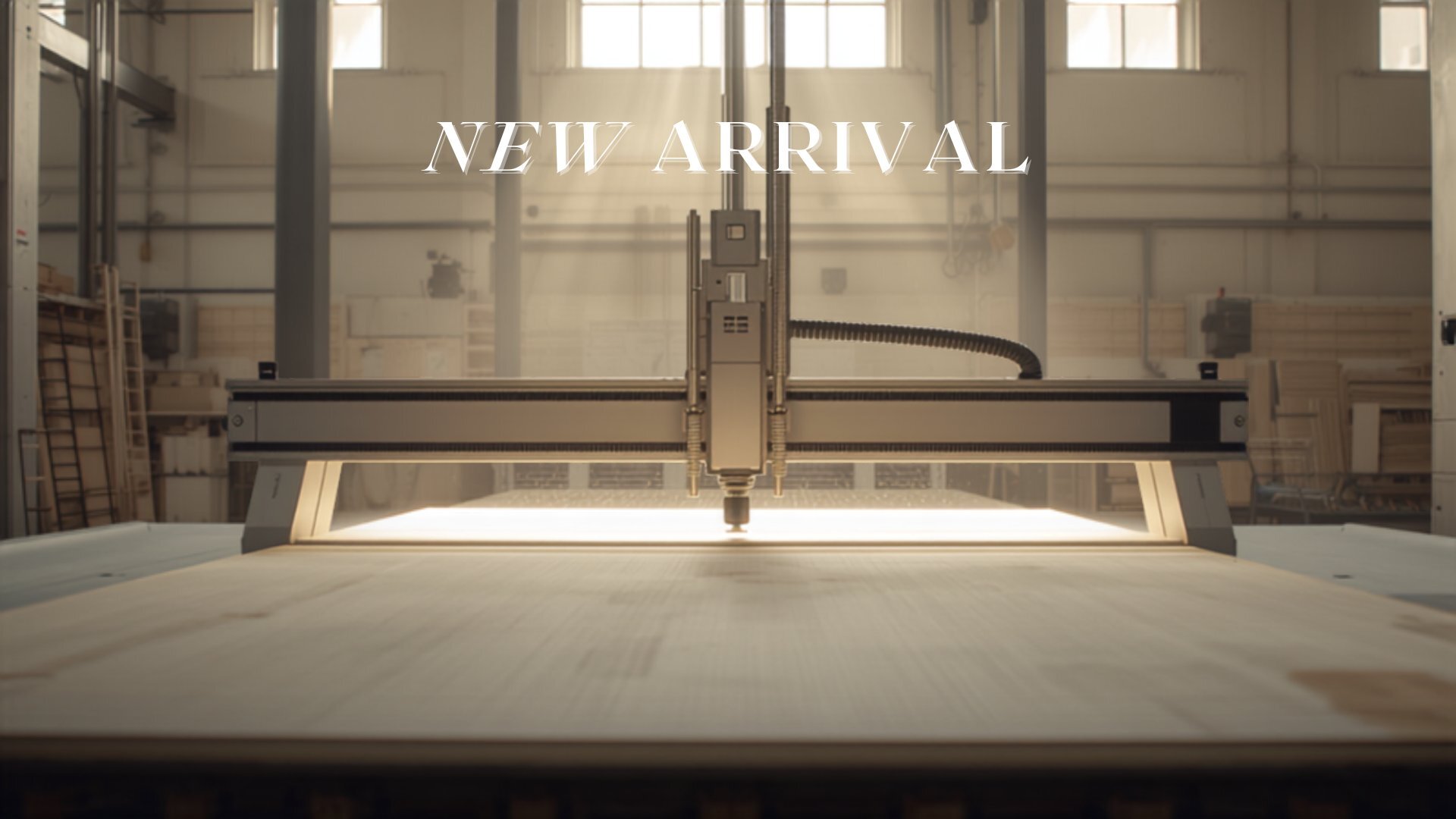
A Japandi kitchen succeeds or fails long before installation. It is decided at the beam saw, where the cutting plan wastes as little board as the geometry allows. It is decided at the CNC, which drills a hinge bore to a tenth of a millimetre — the tolerance that decides, years later, whether a door still sits flush. And it is decided at the edge-bander, the machine most people have never heard of, which seals every cut edge and quietly determines the air quality of a bedroom seven hundred kilometres away.
The aesthetic is restraint. The manufacturing is precision. The first is impossible without the second — a handleless front with a 3mm shadow gap forgives nothing.
The grain room
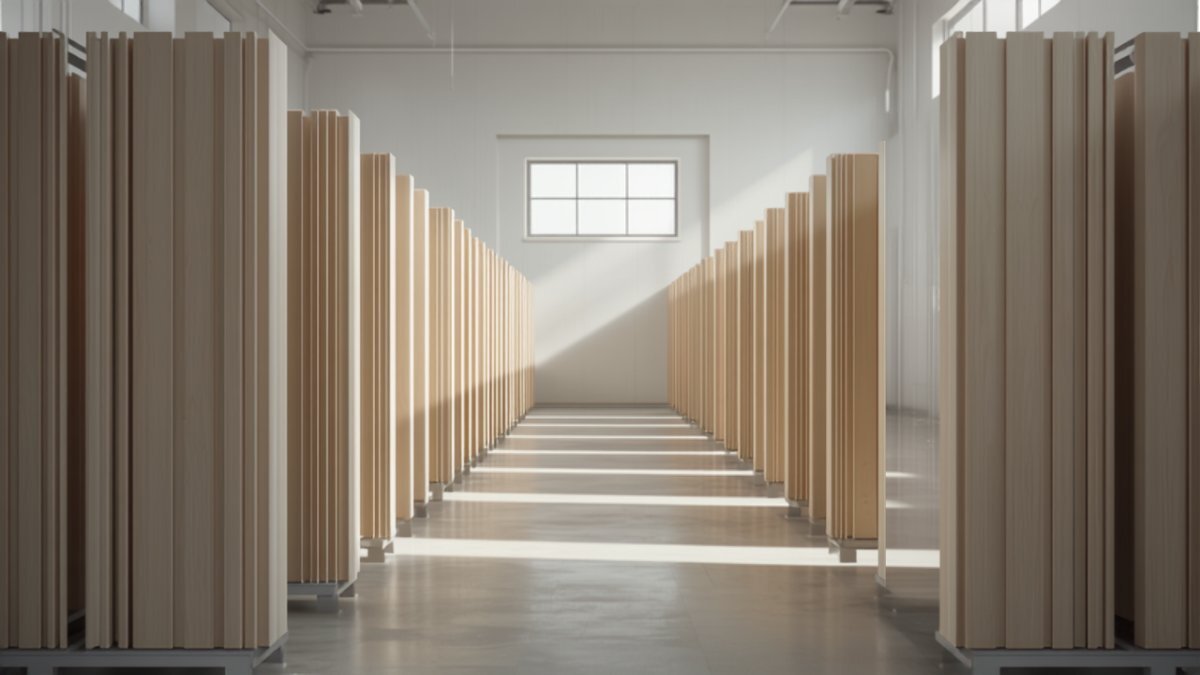
Vertical grain is a Japandi signature, and it is chosen by hand. Boards from the same batch are laid side by side under the warehouse skylights and sequenced so that the grain runs continuously across a bank of doors. It is slow, unautomated work. It is also the difference between a wall of cabinetry that reads as one calm surface and one that reads as a patchwork.
The climate test
Everything that leaves this factory is built for 90 per cent humidity, because everything that leaves this factory lives in it. Senai sits in the same weather as Singapore — the boards acclimatise in our warehouse before they are cut, the finished carcasses are stored in the heat they will live in, and the hardware is specified against the tropics, not against a European test chamber. Our Shuno range is built on this same line, to the same specification, board for board.
One factory, two countries
The factory serves Singapore and Malaysia from a single point. For a Singapore client, that means factory-direct cabinetry without an importer's margin, trucked up the Second Link with our own scheduling. For a KL or Johor client, it means the same boards, the same machines, the same quality control — Japandi cabinetry does not change nationality at the border.
It also means accountability is short. When something is wrong, the conversation is between you and the people who made it. There is no third party to wait for.
The hands
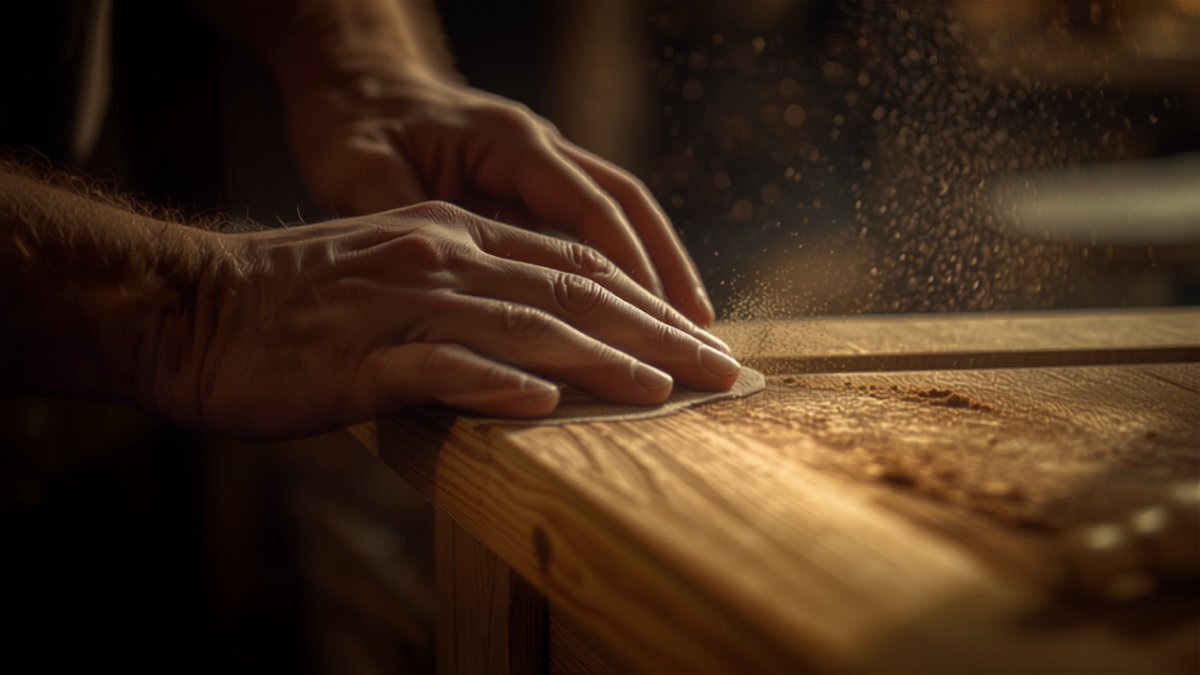
Machines cut and bore, but cabinetry is still finished by people. The edge-bander is run by a technician who has fed it for years and hears a bad glue line before he sees it. Final QC is a person opening every drawer of every carcass, twice. Twenty-seven years of carpentry teaches one durable lesson — the machine guarantees the dimension, the human guarantees the cabinet.
Come and see it
We keep the factory open to clients and trade partners, by arrangement. Designers visit before committing their projects. Homeowners visit less often, but the ones who do choose differently afterwards — it is easier to trust a quote when you have stood beside the machine that will cut your kitchen.
If a drive to Senai is too far, our Mandai workshop and Aperia design office hold samples from the same line — the boards, the finishes, the drawer that closes the way it will close in your home for the next fifteen years.
Begin a quiet conversation.
Visit our Aperia design office, by appointment. 12 Kallang Avenue, #03-07, Aperia Mall.
WhatsApp +65 8821 1455.