
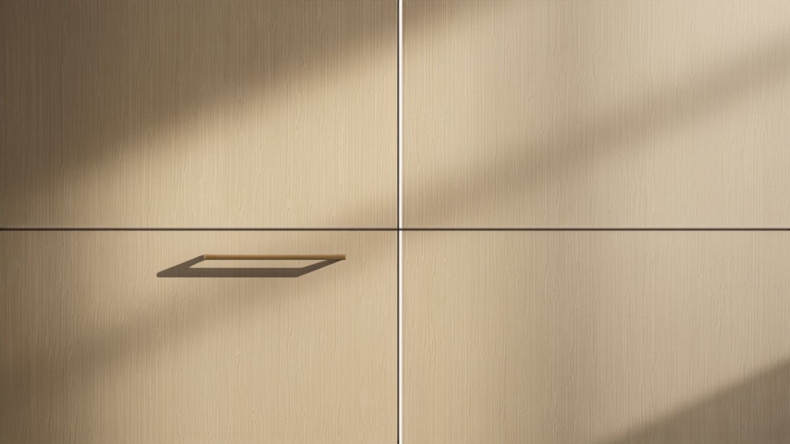
Open a kitchen cabinet in a Singapore flat at the end of a long day and you can usually hear it before you feel it: the small clack of a door that meets its frame a touch too hard, the drawer that needs a second tug. A truly Japandi kitchen cabinet does neither. It closes the way a good conversation ends, quietly and on time. That difference is the whole subject of this piece, because what makes a kitchen cabinet truly Japandi has very little to do with colour swatches and almost everything to do with how it behaves when you live with it.
Japandi gets described as a look, a pale palette of oak and off-white with a few black lines for discipline. That description is not wrong, but it is shallow. The look is a result. Underneath it sits a way of building that borrows restraint from Japanese craft and warmth from Scandinavian homes, then asks both traditions to survive a climate neither was designed for.
What makes a kitchen cabinet truly Japandi is restraint you can touch
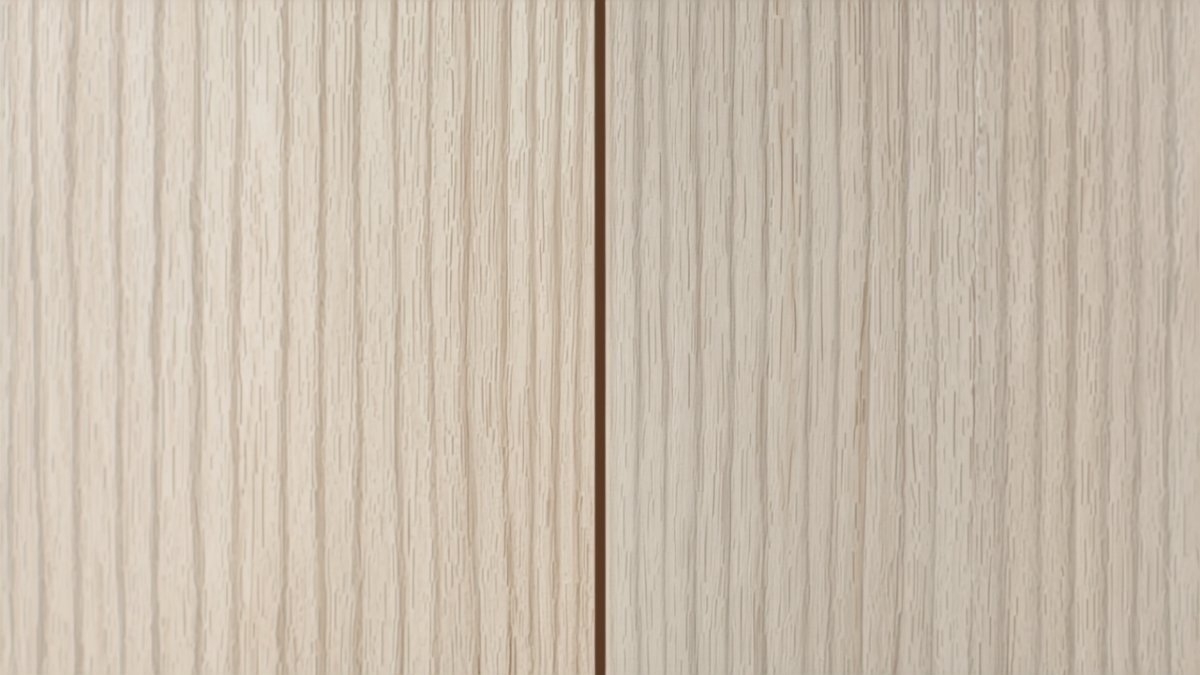
Start with the surface. A Japandi cabinet front is usually handleless, opened with a finger groove or a soft push, so the eye reads an unbroken plane of grain rather than a row of hardware. The grain itself is chosen, not random. Light timbers and matte finishes are preferred because they hold the changing daylight without glare, and because a low sheen forgives the fingerprints of an actual kitchen.
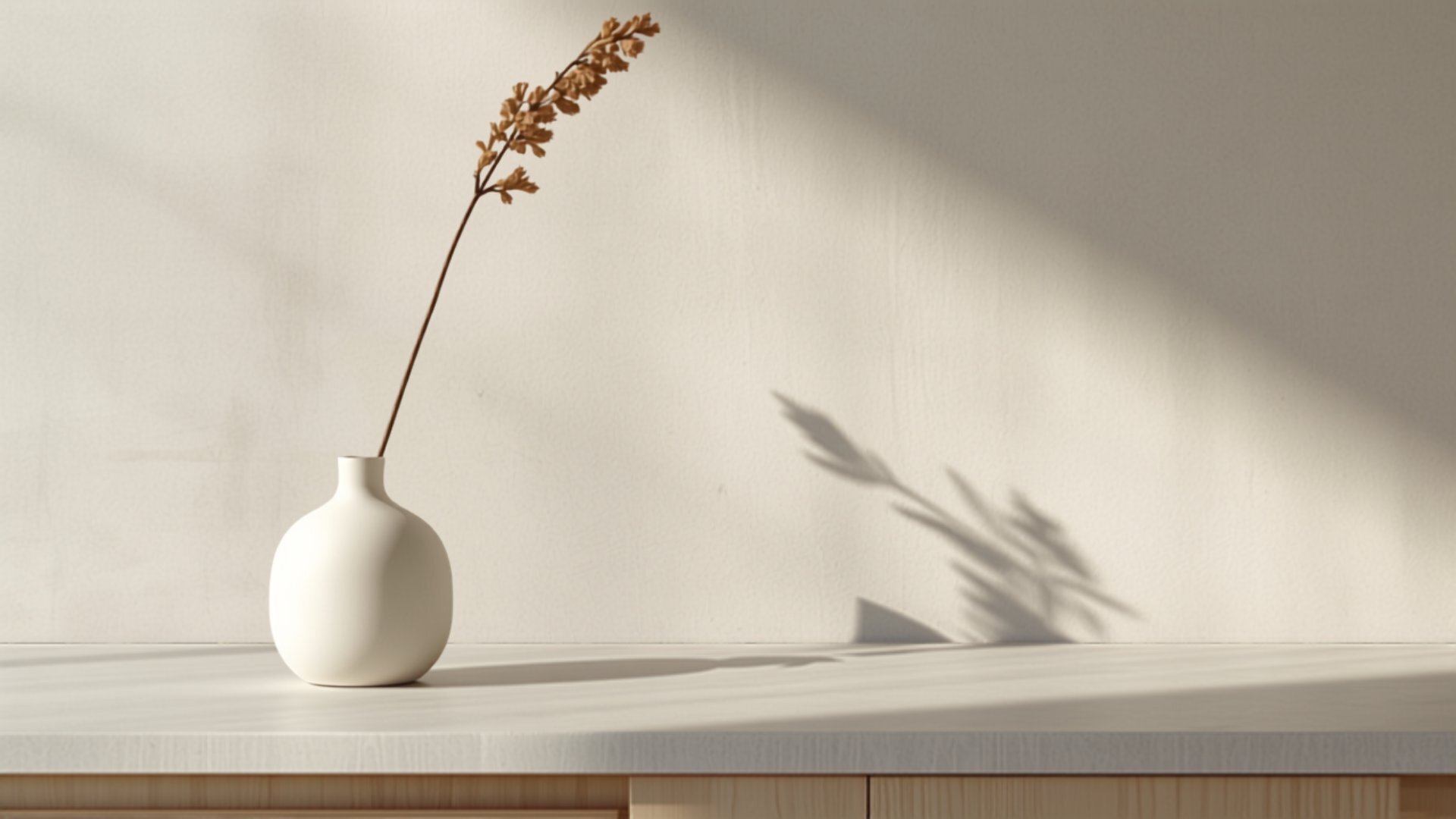
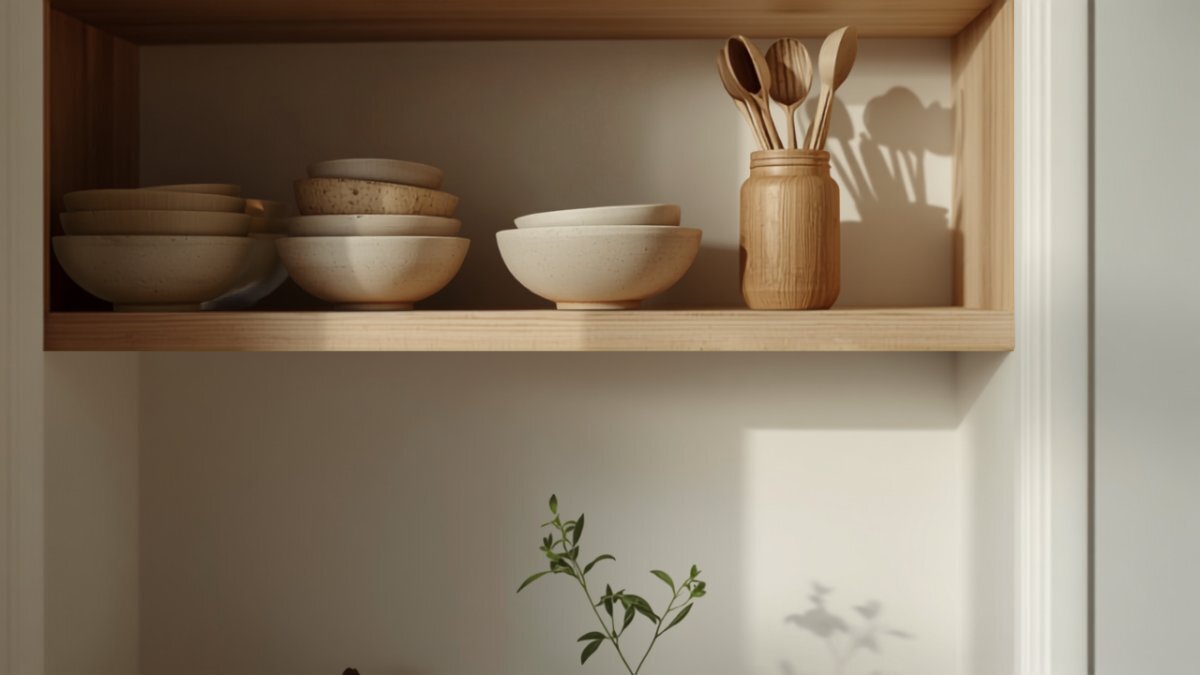
Then there is the idea the Japanese call ma, the considered space between things. In a Japandi kitchen it shows up as breathing room: a run of cabinetry that stops short of the ceiling on purpose, a gap of open shelf where most kitchens would cram another door, a worktop kept clear so the few objects on it can matter. Restraint is not emptiness for its own sake. It is the decision to leave out everything that does not earn its place.
Quiet hardware, honest materials
The parts you never see are where Japandi is won or lost. Soft-close hinges and runners are not a luxury here; they are the point. A cabinet that shuts itself softly removes one more small noise from the home, and the absence of that noise is something you stop noticing, which is exactly the goal. Good Japandi cabinetry is full of details engineered to disappear.
Honesty matters too. A Japandi cabinet does not pretend to be something it is not. If a join is there, it is clean and acknowledged rather than disguised under trim. Edges are finished so the hand finds no surprise. The carcass is built to be as considered as the door, because a calm exterior wrapped around a careless interior is just decoration, and decoration is the thing Japandi quietly refuses to be.
Built for ninety per cent humidity, not a magazine
This is where a great deal of Japandi-styled cabinetry falls apart in Singapore and Malaysia. A pale oak kitchen that photographs beautifully in a dry Nordic flat will swell, warp and sulk in tropical air if the board beneath the veneer was never chosen for it. The Japandi promise of calm depends on materials that stay calm in heat and moisture.
That means moisture-resistant boards, edge sealing that actually seals, and finishes that tolerate a wipe-down kitchen rather than a display one. It also means thinking about air quality, since cabinetry is one of the largest surfaces in a home and the wrong board can quietly off-gas formaldehyde for years. A cabinet cannot be considered truly Japandi, or truly Arimokko, if it asks the people living with it to breathe something they would rather not.
How Mokko Kitchen reads the brief
Inside Arimokko, the kitchen sits with our Mokko Kitchen line, where these ideas stop being adjectives and become decisions on a cutting list. Handleless fronts in light, matte grain. Soft-close as standard rather than an upsell. Carcasses and edge work specified for the climate they will actually live in, not the one the mood board came from. The aim is not a kitchen that announces its style, but one that holds its composure for years and asks very little of you in return.
So the honest answer to the question is this. A kitchen cabinet is truly Japandi when its quiet is built in rather than styled on: when it closes softly, holds its grain without glare, leaves space on purpose, tells the truth about how it is made, and stays composed in tropical air. Get those right and the pale, calm look everyone recognises follows on its own. Get them wrong and you have a photograph, not a kitchen.
If you are weighing up a Japandi kitchen for an HDB flat, a BTO, or a home across the Causeway, that is the test worth carrying into every showroom: not how it looks on the day, but how quietly it will live with you after.