
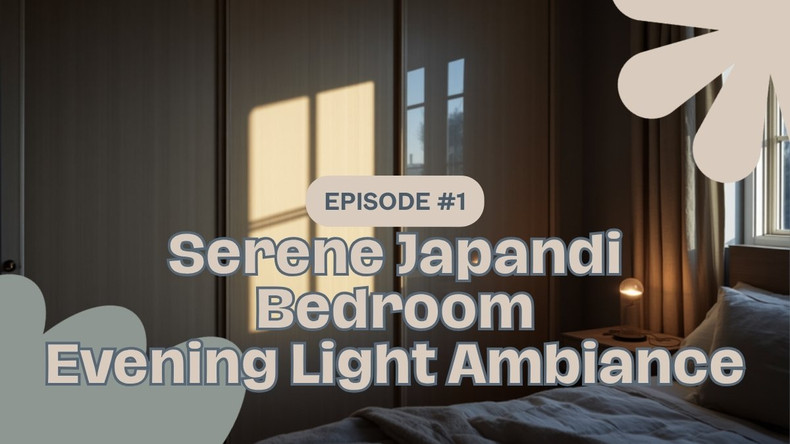
A wardrobe is the last piece of furniture you touch at night and the first you open in the morning. The Japandi wardrobe treats both moments with respect.
There is a sound a good wardrobe makes at the end of the day — barely a sound at all. The door swings back on a slow hinge, meets the carcass, and settles, the way a book closes. The shirts hang in their dark. The room is done. This is the Japandi wardrobe at its quietest, and the quiet is not an accident. It is built in, hinge by hinge.
What makes a Japandi wardrobe
The same language that governs the Japandi kitchen governs the bedroom, with one difference — the wardrobe is furniture you live beside while you sleep, so the rules tighten.
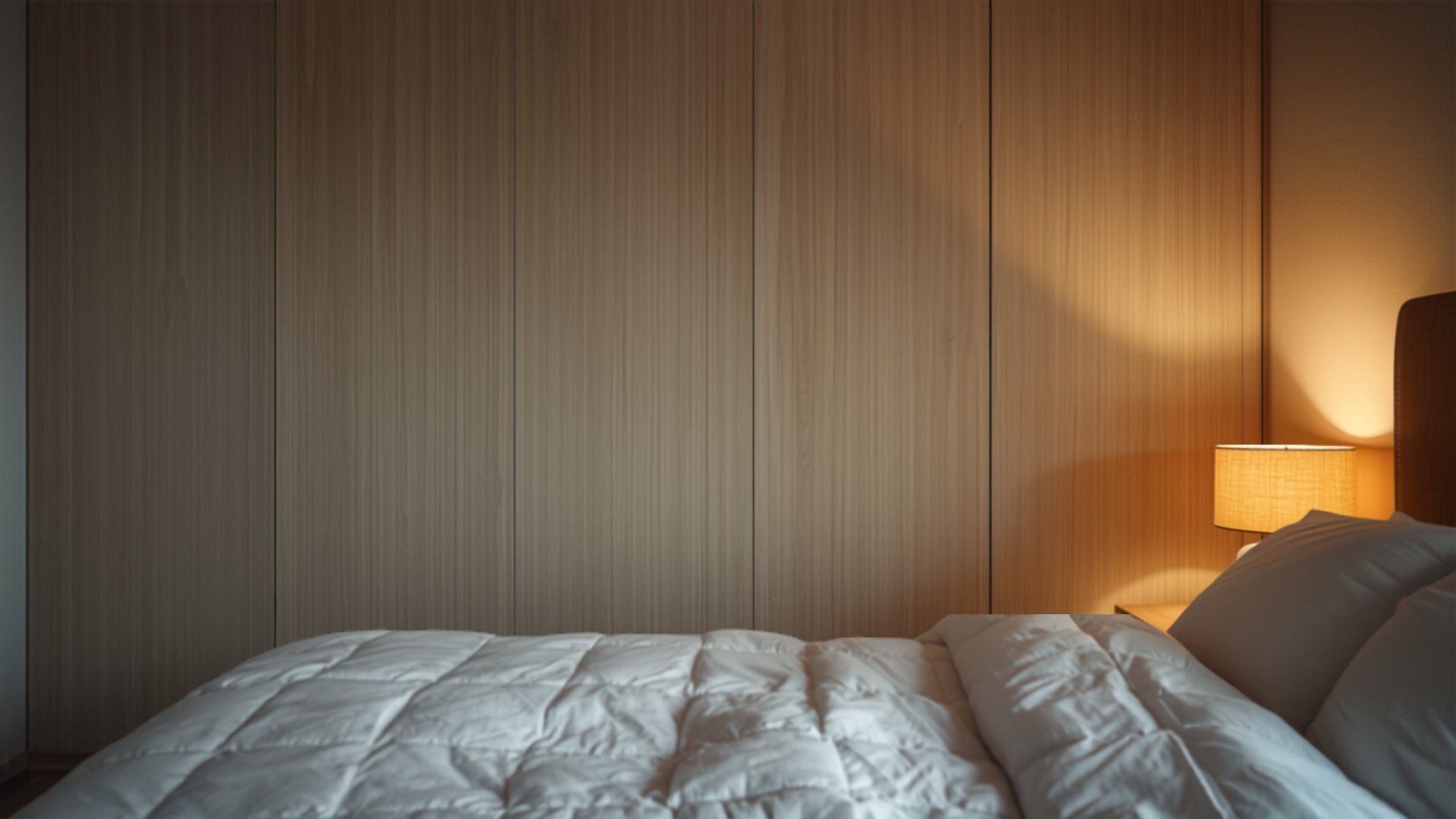
Flush, handleless fronts in warm light wood or soft matte laminate, so the largest surface in the room recedes rather than announces. Vertical grain, to lift the ceiling. No high gloss — a bedroom wall should not reflect the streetlight at 3am. And soft-close everything, because the last sound of the day should not be a slam.
Japanese interiors have a word for the space that is deliberately left empty — ma. A Japandi wardrobe respects it. The design does not chase every cubic centimetre to the ceiling by default; it weighs storage against stillness, and lets the room keep some of its wall.
Inside — the architecture you touch every day
The outside of a wardrobe is design. The inside is biography. A wardrobe drawn well begins with an audit of what you actually own — the ratio of hanging to folded, the long dresses, the belts, the watch that needs a shallow drawer, the luggage that needs a deep shelf.
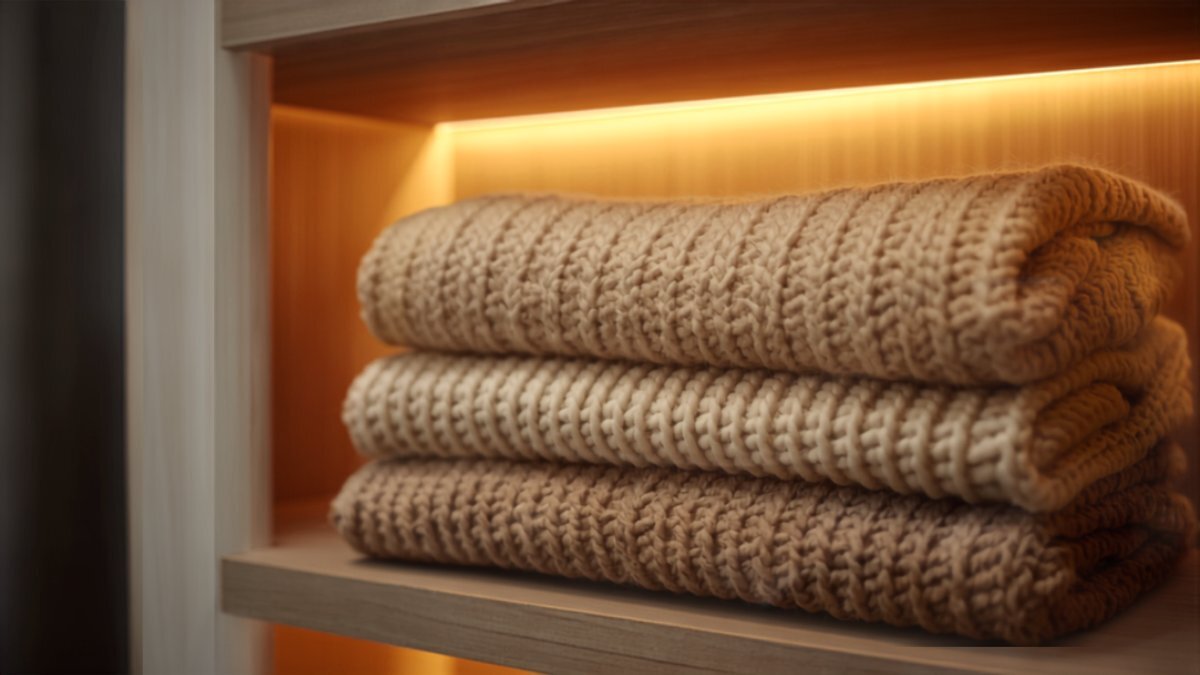
The internal grammar is consistent: double-hang for shirts, long-hang one section only, deep drawers low, shallow drawers at eye level, and a top shelf honest enough to admit it will hold the comforter and the years. Interior lighting on a door sensor — warm, not white — so the 6am shirt is found without waking the room.
The HDB master bedroom problem
An HDB master bedroom gives the wardrobe one wall, usually about three metres, and asks it to hold two adult lives. The Japandi answer is a built-in that runs wall to wall and floor to ceiling on that one wall — and then stops. No L-return crowding the bed. No overhead cabinets riding above the headboard.
Sliding doors where the bed sits close, hinged doors where the room allows. Hinged is always the quieter interior — no centre rail stealing depth, no overlap hiding a third of the wardrobe at any moment. But a door needs 600mm to swing, and a bedroom that cannot give it should not be forced to.
The air beside your pillow
A wardrobe sits closer to your sleep than any other cabinetry in the home, and it is sealed shut for most of the day. Board grade matters more here than anywhere else — E1-grade at minimum, edge-banded on all six sides, for every panel including the ones you never see. The standard protects the air; the edge-banding keeps it honest.
Where Arimokko fits
Arimokko builds bedroom storage two ways. Fully bespoke, measured to the wall, for the master bedroom that needs every millimetre considered. And through Shuno, our modular Japandi storage range — factory-built carcasses and fronts in the same E1-grade board, configured to the room, at a gentler price. Both come out of our own Senai factory, and both close softly.
Closing the day
You will open this piece of furniture roughly ten thousand times in its life. Most of those times will be at the start of the day, when you are not yet yourself, or at the end, when you are tired. It is worth building for those two people.
Begin a quiet conversation.
Visit our Aperia design office, by appointment. 12 Kallang Avenue, #03-07, Aperia Mall.
WhatsApp +65 8821 1455.