
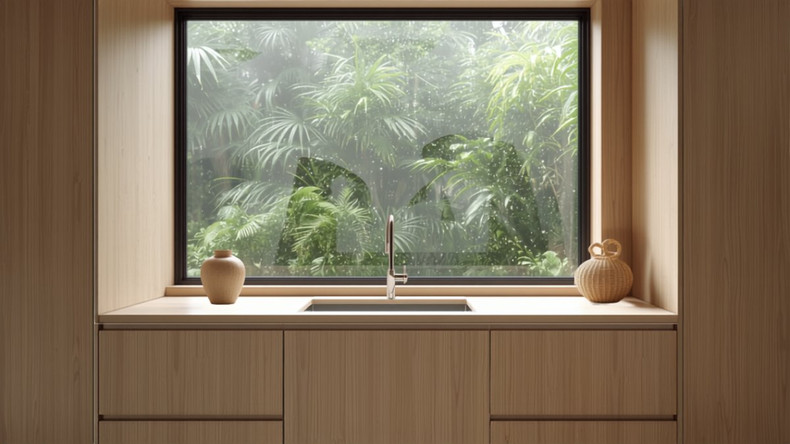
Two in the afternoon in a Singapore kitchen, the air thick after rain. You open a cabinet door and something tells you, in a way you cannot quite name, whether this box will still feel solid in ten years. That instinct is the real question behind plywood vs melamine cabinets in Singapore — not which material is better in the abstract, but which one survives our weather, and where.
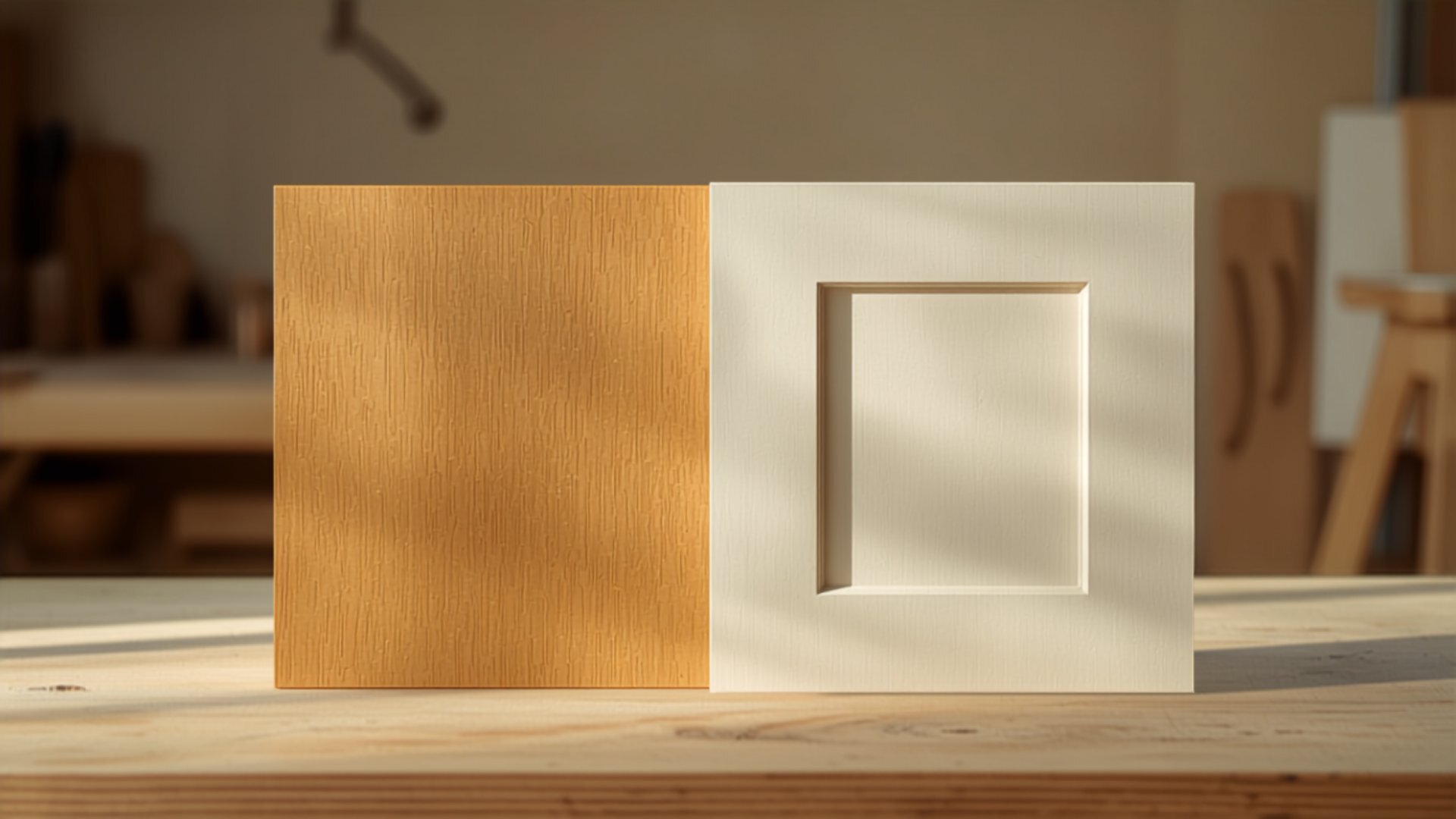
It is a debate that gets loud and unhelpful fast. Plywood people talk as if melamine were disposable; melamine people talk as if plywood were extravagant. The honest answer is quieter than either camp, and it starts by admitting that both materials are good — at different jobs.
What plywood does well, and where it struggles
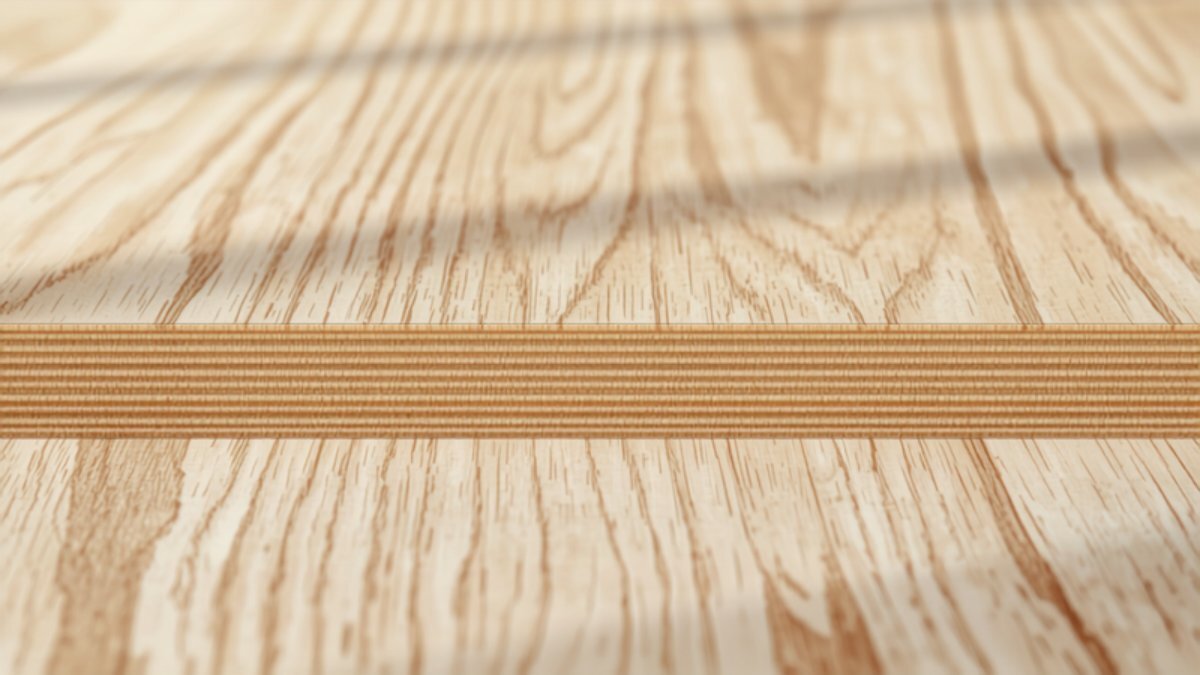
Plywood is layers of thin wood veneer, glued with the grain alternating, then pressed. That cross-grain construction is its gift.
It holds a screw firmly, resists sagging over a long span, and — in its moisture-resistant grade — shrugs off the damp better than most boards. For the base of a sink cabinet, where a slow leak or a mopped floor is a fact of life, moisture-resistant plywood is genuinely reassuring. It is also lighter than you expect for its strength.
Where plywood struggles is the surface and the wallet. Raw plywood needs a veneer or laminate over it to look finished, which adds cost and a second point of failure at the edge. Lower grades can hide voids — small gaps between the plies — that you only discover when a screw finds nothing to bite. And good marine or moisture-resistant plywood is not cheap, so an all-plywood home can run well past what the result justifies.
What melamine does well, and where it fails
Melamine is not really the board — it is the skin. A tough, resin-saturated surface bonded under heat and pressure onto a core, usually particleboard or MDF.
That skin is the point. It is hard, colour-stable, easy to wipe clean, and it comes in the calm matte oat and pale-oak tones a Japandi kitchen lives on. The surface resists scratches and does not need a separate finish, so what you see is what protects it. For visible cabinetry — the doors and fronts you touch and look at every day — a good melamine board gives a consistency of colour and grain that is hard to match affordably.
Where melamine fails is at the wound. If water reaches the core through an unsealed edge or a drilled hole, ordinary particleboard swells and does not recover. This is the horror story every plywood advocate tells, and it is true — of cheap board, badly sealed. Which is exactly why the grade and the edge banding matter more than the label on the front.
The word you should actually ask about: HMR
Between the two camps sits a board worth knowing — HMR, high-moisture-resistance particleboard, usually tinted green so you can spot it.
HMR board is engineered to resist swelling far better than standard particleboard, and it takes a melamine skin beautifully. In our climate it closes much of the gap that gives melamine its bad name. When someone quotes you a melamine cabinet, the real question is not melamine or plywood — it is what core sits under that skin, and whether the wet zones use a moisture-resistant grade at all.
Plywood vs melamine cabinets in Singapore — the Arimokko working answer
After twenty-seven years of building in this humidity, we have landed somewhere unglamorous and true.
For visible cabinetry — the doors, the fronts, the tall wardrobe faces — we favour a low-formaldehyde melamine board. It gives the quiet, even surface the Japandi look depends on, holds its colour under our harsh light, and wipes clean after a curry night without complaint. Run your hand across a melamine door done well and the edge banding is so cleanly fused you have to search for the seam. That is the point: the material disappears, and the room stays calm.
For the wet-zone carcass — the box under the sink, the base beside the hob, anywhere water is a matter of when, not if — we build in moisture-resistant plywood. Not because it looks better; you rarely see it. Because when a pipe weeps at midnight, the structure holds, dries, and carries on. It is the part of the cabinet you are meant to forget, and plywood lets you forget it.
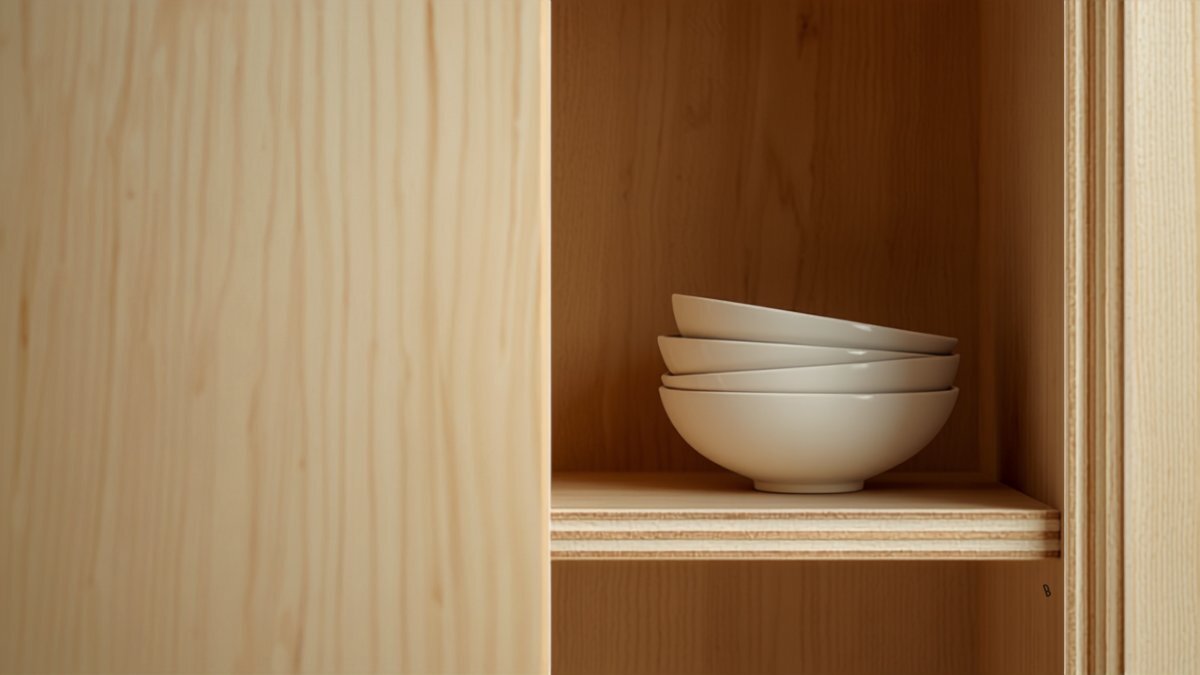
This is not a compromise. It is each material doing the one thing it does best — melamine at the surface you live with, plywood at the structure you rely on. You can read how this plays out across a full kitchen in our guide to which cabinet material survives Singapore's 90% humidity.
The evidence, quietly
A note on the melamine we specify, offered as proof rather than headline.
Our boards are E1 low-formaldehyde grade — a standard that limits off-gassing into the air of your home — and our lamination and finishing carry no added VOCs. This matters most in a closed HDB kitchen, where the air you breathe while cooking is the air the cabinets sit in. It is a reason to feel easy about melamine, not a reason to choose it; the choice still comes down to the right board in the right place. Our Mokko Kitchen range is built on exactly this principle, and you can read our philosophy on the About Arimokko page.
So the climate-true answer is not a winner. It is a pairing: E1 melamine where you look, moisture-resistant plywood where the water goes.
Open the door again, after the rain. It should feel like nothing at all.
Solid, quiet, unremarkable — as it should be.