
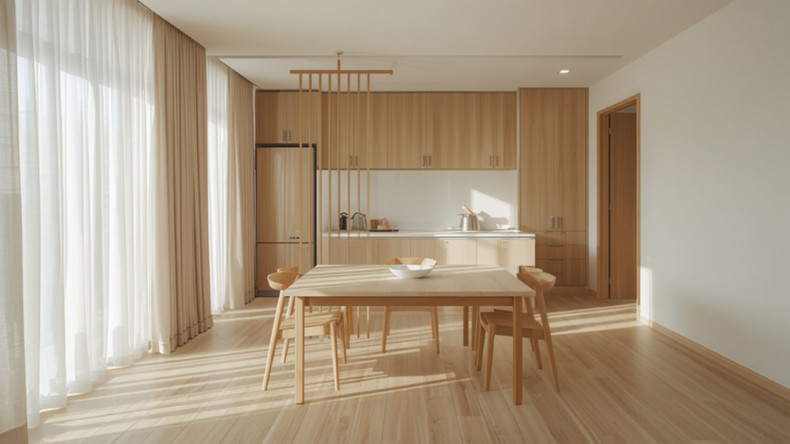
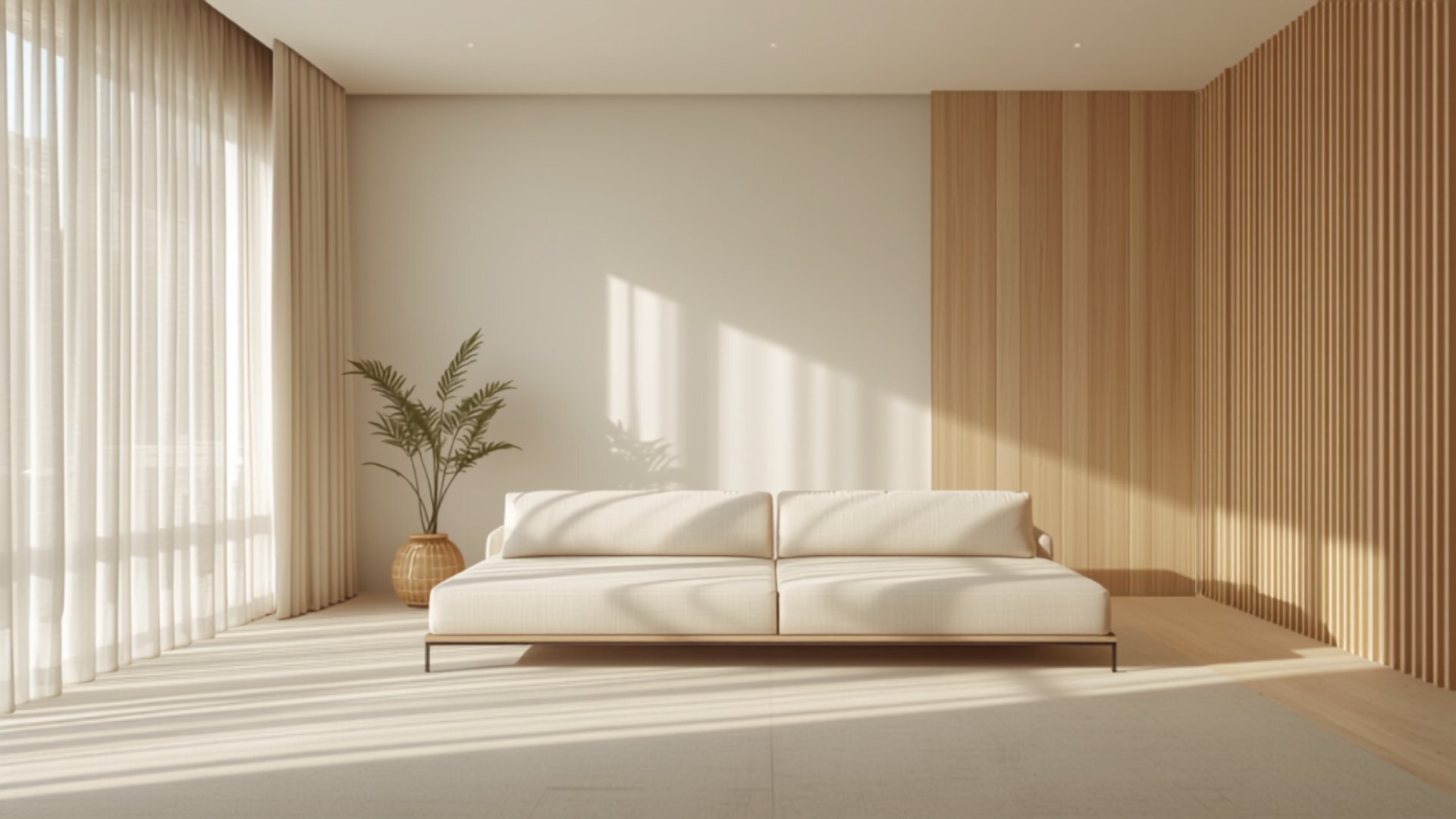
Step through the door of a Japandi 4-room HDB and the first thing you notice is what you do not hear. No clatter of competing finishes, no wall fighting for attention. The light lands on warm oak and soft white, the floor runs unbroken from the entrance to the living room, and the flat feels larger than its ninety-odd square metres because nothing in it is shouting. This is a walkthrough of how a standard 4-room comes together when the brief is calm — room by room, decision by decision.
A 4-room HDB gives you roughly 90 sqm, a single long living-dining run, a galley or L-shaped kitchen, and three bedrooms. It is the most common home in Singapore, and the most rewarding to bring into Japandi, because the bones are honest to begin with. The Japanese idea of kanso — simplicity, the removal of the unnecessary — does most of the work. The rest is joinery that knows when to disappear.
Designing a Japandi 4-room HDB, starting at the door
The entrance foyer is the handshake. In a 4-room it is usually a metre of wall before the living room opens up, and it sets whether the home reads as calm or cluttered. We give it a full-height shoe cabinet with a ventilated back, a recessed niche for keys and a tray, and a slim bench in light timber. Closed storage for the mess, one open ledge for a single considered object. The floor material that will run through the whole flat starts here, so the eye is never interrupted by a threshold strip.
The living and dining run
This is the long heart of the flat, and the temptation is to fill it. Japandi does the opposite. Along the TV wall, a low, handleless media console in warm oak holds the electronics and the cable clutter behind flat fronts, with a single floating shelf above for restraint rather than display. The dining side gets a built-in bench against the wall — it saves the floor, seats more people than chairs, and stores seasonal things underneath.
Keep the upper walls quiet. One artwork, one band of open shelf at most. The calm of a 4-room living room comes from the floor and the walls being allowed to breathe, not from how much you can mount on them. Warm wood, soft white, a grounding charcoal or clay accent in the textiles, and natural light left to do its job.
The kitchen
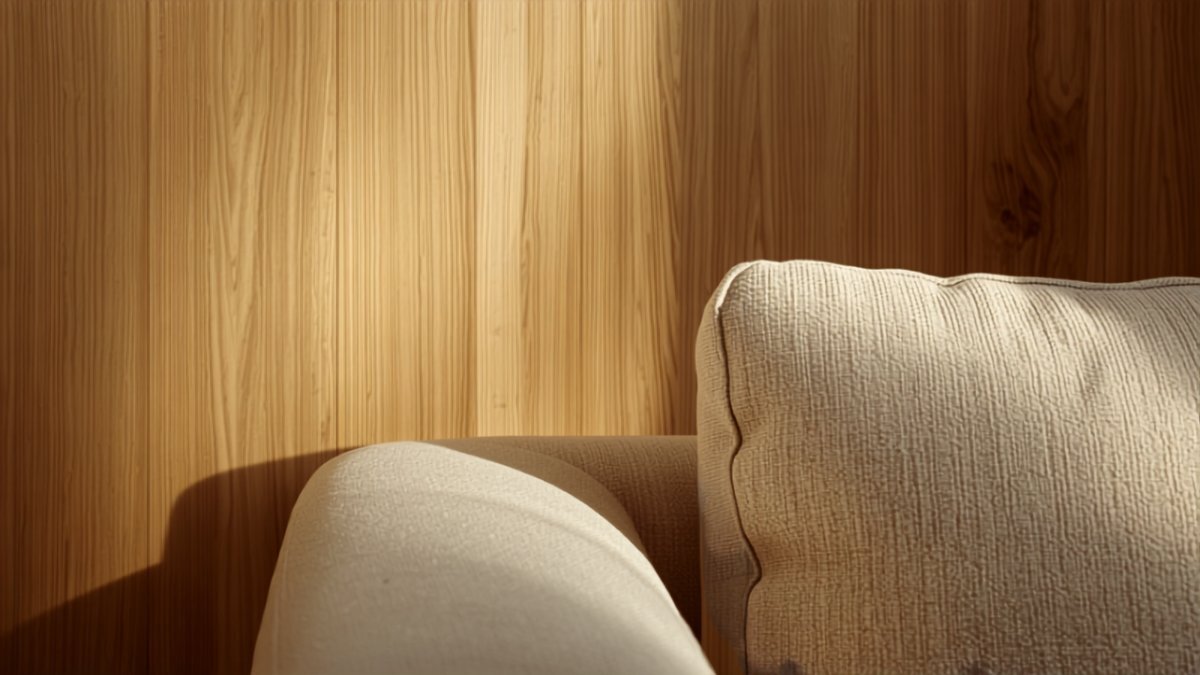
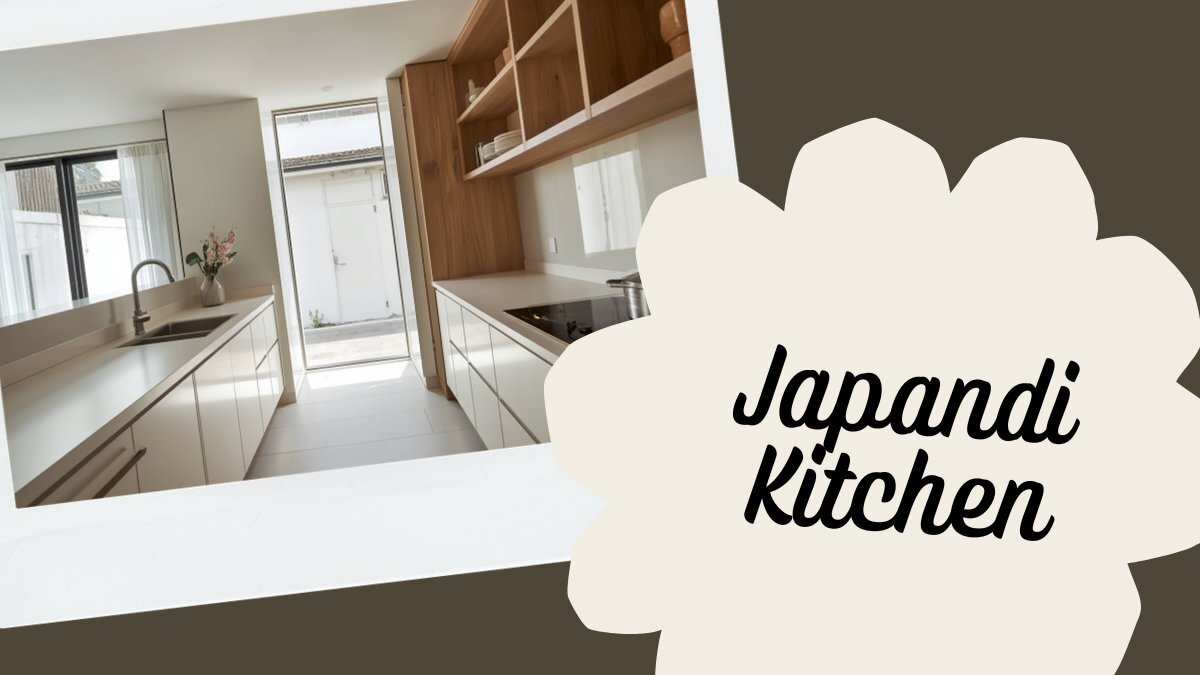
A 4-room kitchen is compact, usually galley or L-shaped, and it carries the heaviest load in the home. Full-height units along one wall — pantry, tall appliance housing, concealed bins — free the worktop and keep the room reading as one plane. Handleless fronts wipe clean and stay calm against Singapore’s cooking. Our Mokko Kitchen approach is built for exactly this footprint: storage that sits flush, opens to a touch, and asks nothing of the eye while you work.
Because the kitchen sits in a flat at high humidity for most of the year, the carcass should be moisture-resistant board with sealed edges, and the boards we specify are E1-rated for low formaldehyde, so the air in a small enclosed kitchen stays honest. A calm kitchen is one where the storage is generous and invisible at the same time.
The master bedroom
The master in a 4-room rarely fits a walk-in, so the wardrobe becomes the largest surface in the room and should be treated as architecture. A wall-to-wall, ceiling-height wardrobe in a warm matte finish recedes; a freestanding unit with trims and handles advances and crowds the bed. Inside, a place for each thing so the doors stay shut — soft-close runners, a balance of hanging and drawers, a shallow valet shelf for the watch and glasses at the end of the day.
Keep the bedside low and uncluttered, the lighting warm and layered, the palette one shade quieter than the living room. This is the room where storage should be felt and never seen.
The second bedroom and the study
The two smaller rooms are where a 4-room earns its flexibility. One becomes a child’s room or guest room with a full-height wardrobe and a study ledge built into the joinery rather than added as furniture. The other often becomes a home office or a flexible room — a slim desk run, concealed storage above, and a daybed or murphy bed that gives the room back when guests come. The discipline is the same throughout: build storage into the walls so the floor stays open.
The bathrooms and the small honest details
Japandi does not stop at the cabinetry. In the bathrooms, a wall-hung vanity in a warm laminate with a stone-look top keeps the floor visible and the room feeling larger. Mirror cabinets hide the clutter of daily things. Throughout the flat, the small details carry the language: consistent timber tone, matte rather than gloss, tactile handles where handles are needed, and a restraint in the number of materials — two woods at most, one stone, one metal.
What a Japandi 4-room HDB costs in feeling
The walkthrough adds up to a home that feels settled rather than styled. The investment is not in more — more units, more features, more finishes — but in less, done precisely. Full-height joinery, handleless fronts, a single floor running through, and storage that disappears so the rooms can be quiet. A 4-room HDB has every quality Japandi asks for. The work is in editing, not adding.
Where Arimokko comes in
We design and build bespoke carpentry for homes in Singapore and Malaysia, made in our own Senai workshop and fitted to the exact dimensions of your flat. A Japandi 4-room HDB is planned wall by wall, room by room, with the storage decided before the finishes. If you are bringing a 4-room into Japandi, the walkthrough above is where we start the conversation.