
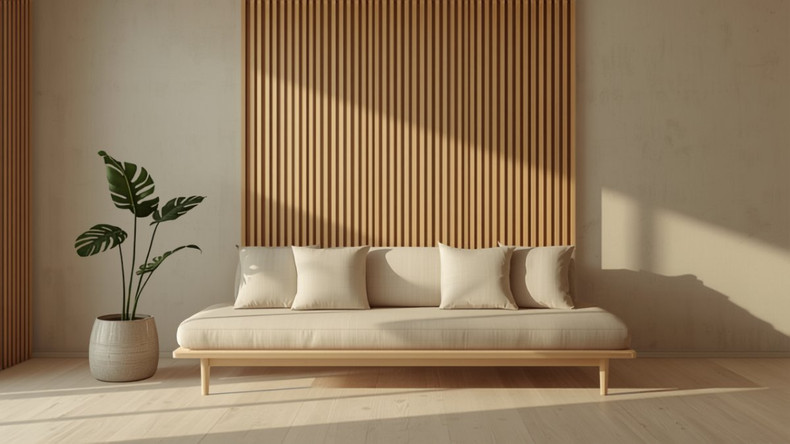
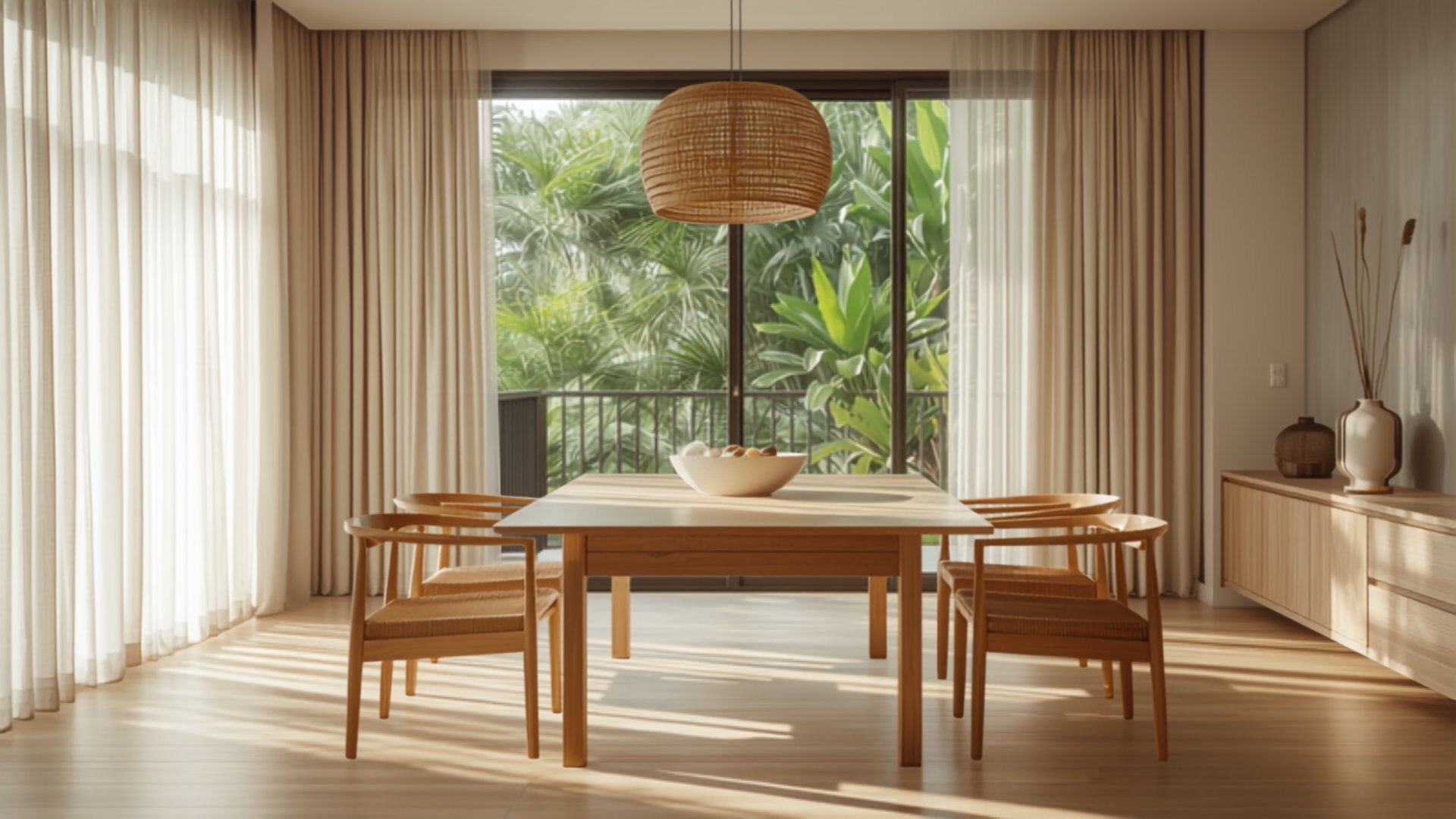
The kitchen in a Petaling Jaya terrace, late afternoon. Light moves across pale oak. A kettle ticks as it cools. Outside, the rain begins. The room holds its breath, and then settles. This is Japandi at home in Malaysia — not a look, but a way of standing inside a house.
Japandi began as a quiet conversation between two design traditions: the discipline of Japanese craft and the warmth of Scandinavian living. In Malaysia, that conversation has to learn a new climate. The air is heavier here. The light is whiter. Cabinets swell and breathe through the year. A Japandi home in Kuala Lumpur is not a Japandi home in Copenhagen, and it should not pretend to be.
Japandi in Kuala Lumpur — calm against the city
KL homes carry the noise of the city up the lift shaft. The role of a Japandi interior here is to hold a quieter line. We see it most often in condominium kitchens — long, low cabinetry in light oak or warm grey, handleless fronts, a single grain running the length of the wall. The eye has somewhere to rest.
What matters in KL is the choice of material. High-rise kitchens sit above a stack of other kitchens, all cooking, all venting. Humidity travels. Plywood carcasses with proper edge-banding outlast melamine-on-particleboard in this environment, often by years. The Japandi surface is calm; the structure underneath has to be honest.
Storage is the second consideration. KL apartments rarely have the floor plan for open shelving as theatre. Closed cabinetry — tall, full-height, drawn flush to the ceiling — gives the room its quiet. Tools live behind doors. The countertop stays clear. The room reads as a room, not as a display.
Japandi in Johor — the cross-border vocabulary
Johor sits at an interesting hinge. Many homes here are built or renovated with Singaporean references in mind, but the climate and the spatial generosity belong to Malaysia. Landed homes are larger. Ceilings are higher. The room can take a longer line.
Our Senai workshop sits a short drive from Johor Bahru, and the Japandi homes we build here tend to use that scale. A run of kitchen cabinetry can extend further. A wardrobe wall can be properly deep. The grain of the timber can be allowed to breathe. The restraint is in the palette and the joinery, not in the dimensions.
Materially, Johor homes face the same humidity story as Singapore — sustained 80–90 per cent through much of the year. Cabinet builds that suit air-conditioned interiors in Europe will quietly fail here within a few seasons. We specify HMR plywood, low-emission boards, and finishes that have already lived through a Malaysian wet season before they reach a client's home.
Japandi in Penang — heritage shapes, modern hush
Penang adds a third voice. Many of the homes we have worked on in George Town and on the island sit inside heritage shells — shophouses, pre-war terraces, low-roof bungalows. Japandi suits these buildings unusually well. The vocabulary is patient enough to share a room with old timber floors and air-well shadows without competing with them.
The work in Penang is often about subtraction. A Japandi kitchen in a shophouse means choosing which features to leave alone. The original timber stair, the brickwork at the air well, the height of a colonial ceiling — these are already doing the design's work. New cabinetry should sit politely beside them. Pale oak fronts, recessed handles, a soft matt finish that doesn't catch the late afternoon light.
In a heritage Penang home, the Japandi idea of ma — the considered space between things — becomes practical advice. Leave the air-well wall. Leave the timber beam visible. Build the cabinetry to defer to what's already there.
What stays the same across all three cities
The Malaysian Japandi homes that age well share a small set of decisions.
One palette, held lightly. Two timbers at most — usually a pale oak with a warmer accent. A single quiet stone for the counter. Walls in chalk, off-white, or a soft mineral grey. The discipline is not in adding; it is in stopping.
Honest carcass material. Plywood with proper edge-banding for cabinet bodies. Low-formaldehyde boards as the floor, not the ceiling, of specification. In Malaysia's humidity, the cabinet you cannot see does most of the work.
Handleless or near-handleless fronts. The clean line is a Japandi signature, but it is also a practical one — fewer protrusions in a small KL galley, fewer hand-marks on a Johor family kitchen, a softer silhouette in a Penang shophouse.
Storage that is full-height. A Japandi kitchen looks calm because nothing is sitting out. That requires the cabinetry to take everything in — small appliances, dry goods, the rice cooker, the kettle. The plan starts from what the household owns, not from a render.
How Arimokko approaches a Malaysian Japandi home
We design and build from a workshop in Senai, which means our Malaysian clients work directly with the team making the cabinetry. Mokko Kitchen, our kitchen-focused line, gives the language for the heart of the home — the long, low, handleless runs that anchor a Japandi room. The same hands and the same materials carry through to wardrobes, vanities, and the quieter joinery of a Japandi house.
The process is slow on purpose. A measure, a conversation, a drawing, a sample. Then another conversation. Japandi homes that work are the ones where the client and the maker stopped to consider the same things together — the height of a drawer, the depth of a shadow gap, the place a hand actually lands on a door.
A quiet next step
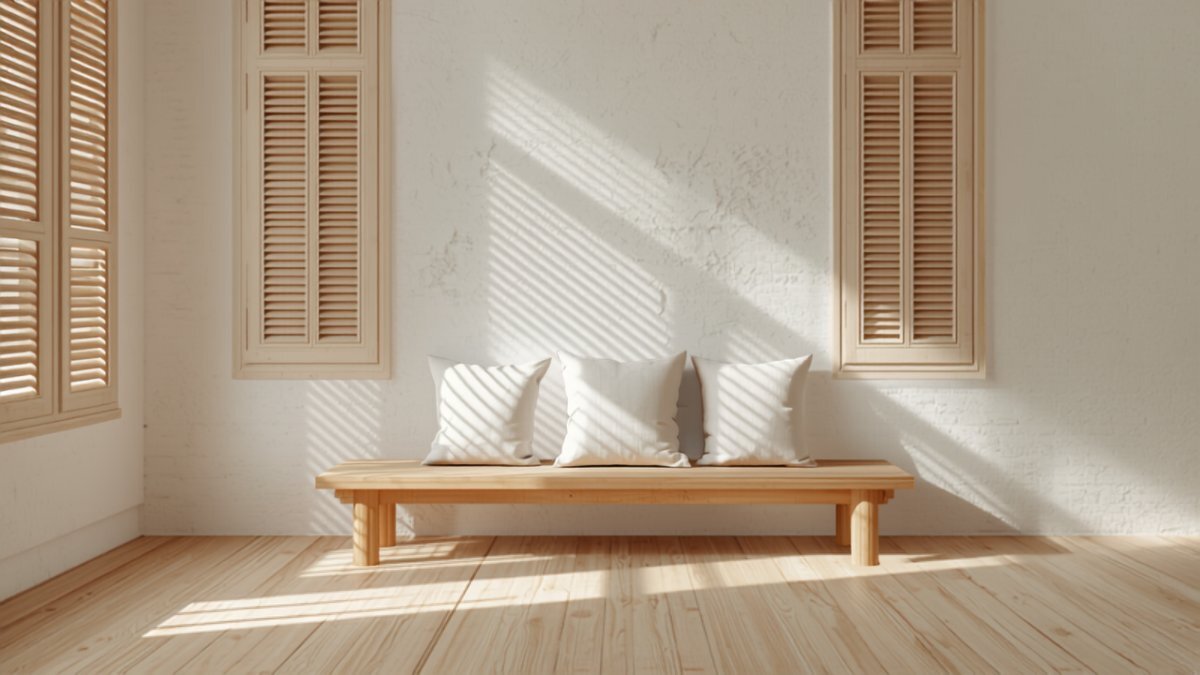
If you live in KL, Johor, or Penang and are considering a Japandi home — a kitchen, a wardrobe, a whole apartment — the most useful first step is usually a site visit. We look at the light, the air movement, the way you already use the room. The cabinetry follows from that, not the other way around.
Arimokko builds for Singapore and Malaysia from a single workshop in Senai. To begin a conversation, write to us at hello@arimokko.com or visit arimokko.com.