
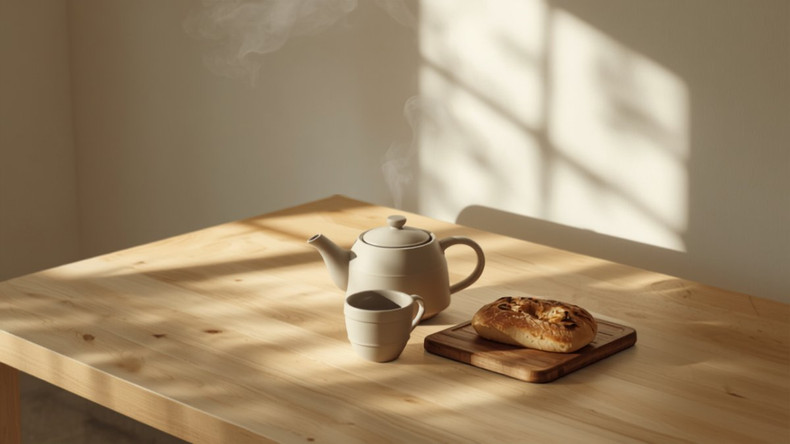
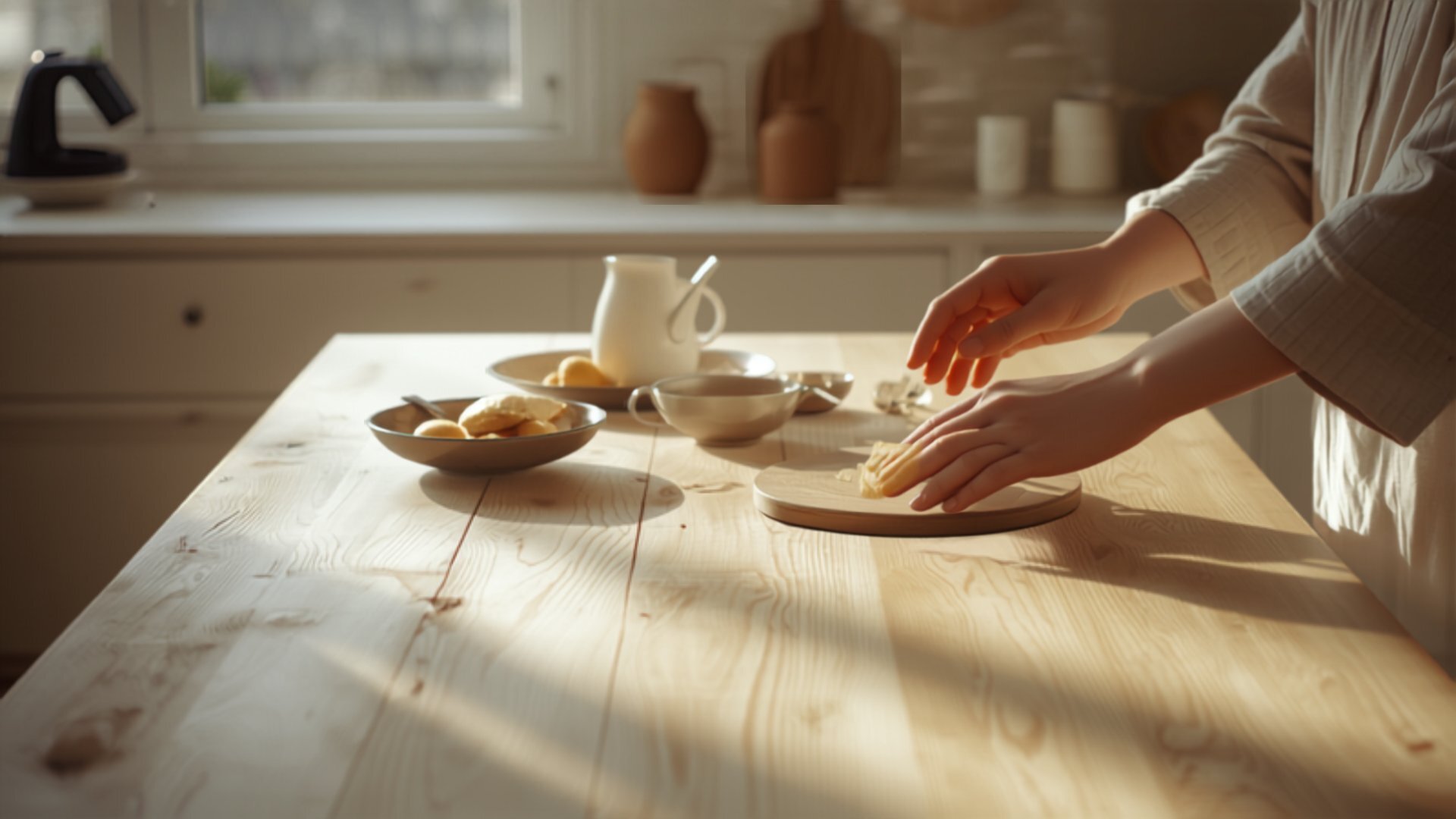
There is a particular hour in a Singapore home—late afternoon, the light gone gold and low—when the kitchen stops being a workroom and becomes the place everyone drifts toward. Someone leans on the counter. A kettle ticks as it cools. This is the hour Mokko Kitchen is designed for: not the photographed kitchen, but the lived-in one, warm at the centre of the day.
Mokko Kitchen is our Japandi kitchen range, and it grew out of a simple observation. The kitchen is the heart of the home, yet most are built to look impressive rather than to feel calm. We wanted to make the opposite—a kitchen that recedes when you are not using it and supports you completely when you are.
What makes a Mokko Kitchen feel like the heart of the home
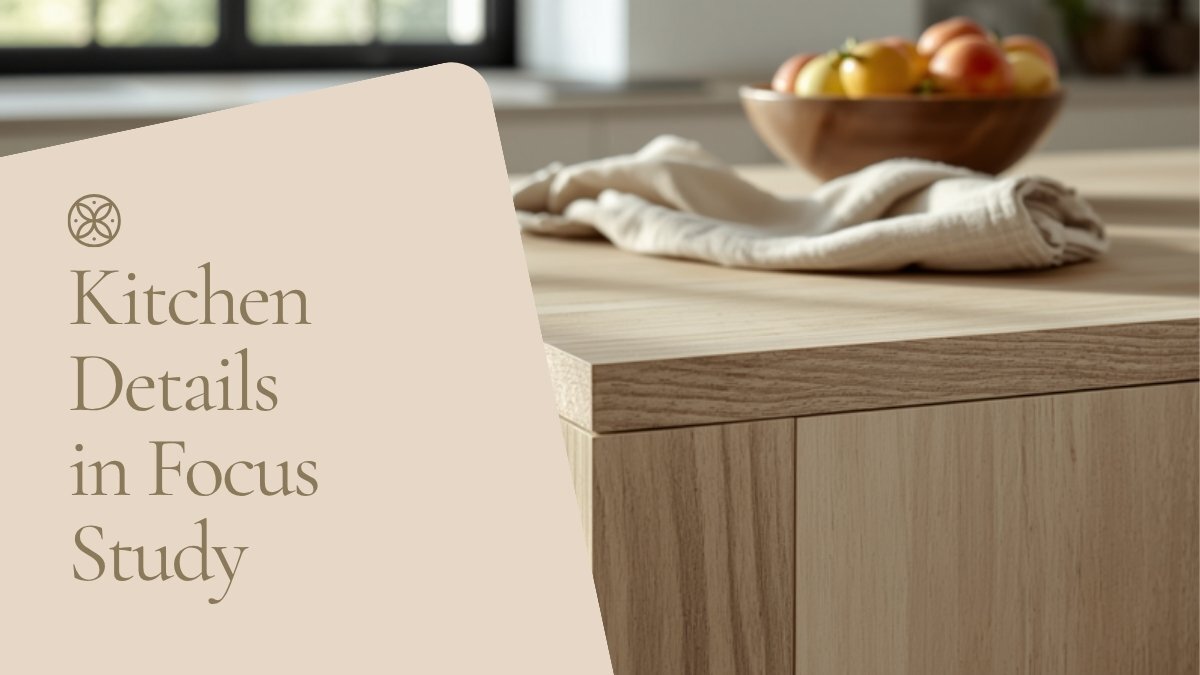
The first decision is what you remove. Handles, busy hardware, high-contrast colour—these all ask for attention. A Mokko Kitchen is handleless by default, finished in soft matte tones that hold the light instead of bouncing it. The result is a surface your eye can rest on, which is exactly what you want in the room where you spend the most ordinary time.
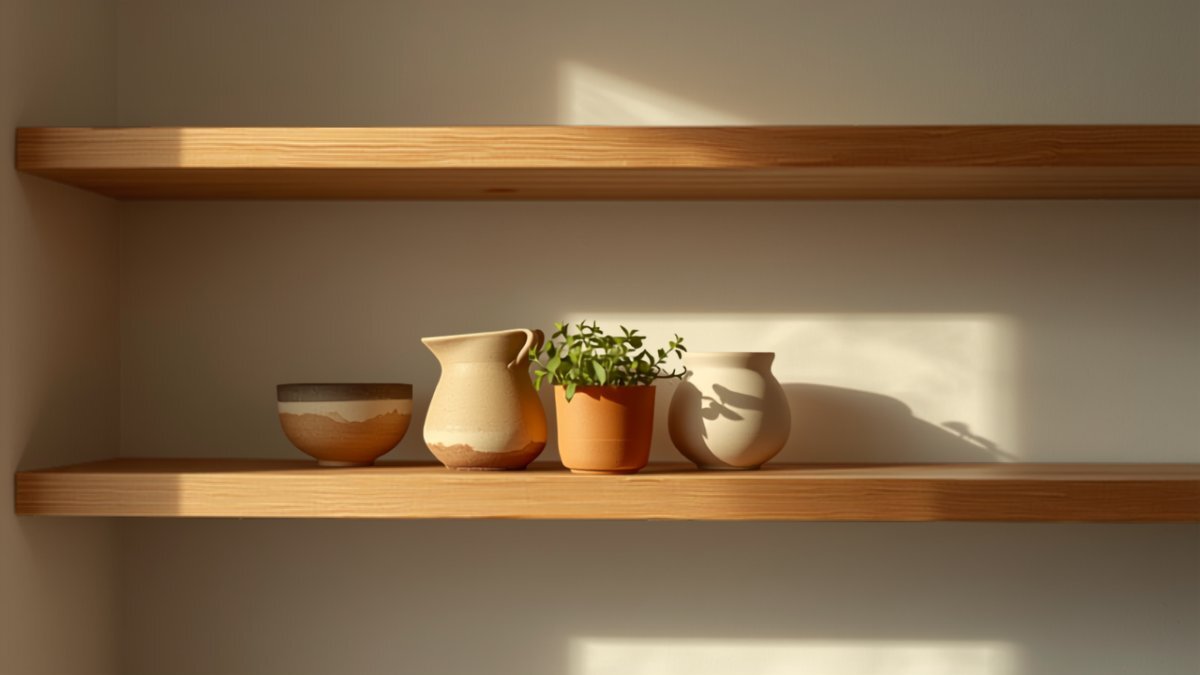
The second decision is the grain. We work in warm, light timbers chosen to age gracefully in our climate. One tone runs through the run—tall units, base cabinets, and the open shelf where the everyday bowls live—so the kitchen reads as one quiet idea rather than a collection of parts.
Built for the way Singapore actually cooks
A calm kitchen still has to survive daily wok heat, humidity, and a sink that rarely rests. Beauty that cannot take the weather is just decoration. Every Mokko Kitchen is built on moisture-resistant cores with low-emission boards, because the air in the room where you feed your family should be as considered as the finish on the doors.
The layout follows the cook, not the catalogue:
- The working triangle stays short. Sink, hob, and fridge sit within an easy turn, so the body moves less and the meal comes together faster.
- Tall storage anchors the ends. Pantry and appliances tuck into full-height units, leaving the counter between them clear to actually work on.
- Soft-close everything. Drawers and doors that settle quietly are not a luxury—they are the difference between a kitchen that feels tense and one that feels calm.
- One open shelf, kept sparse. A single shelf of daily pieces brings warmth; a wall of them brings clutter. Restraint is the whole craft.
The quiet centre of a Japandi home
When the cabinetry is calm, the kitchen can hold everything else—the conversations, the half-finished homework, the slow Sunday breakfast. That is the real aim of Mokko Kitchen. Not to be the most striking room in the home, but to be the one the household keeps returning to, almost without noticing, because it feels good to stand in.
A kitchen, built well and built quiet, asks for nothing and gives back the best hours of the day. That is what we set out to make, and it is what Mokko Kitchen is for.