
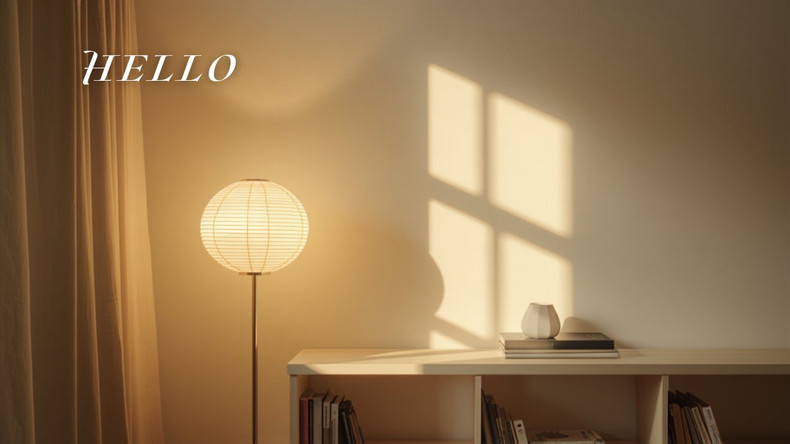
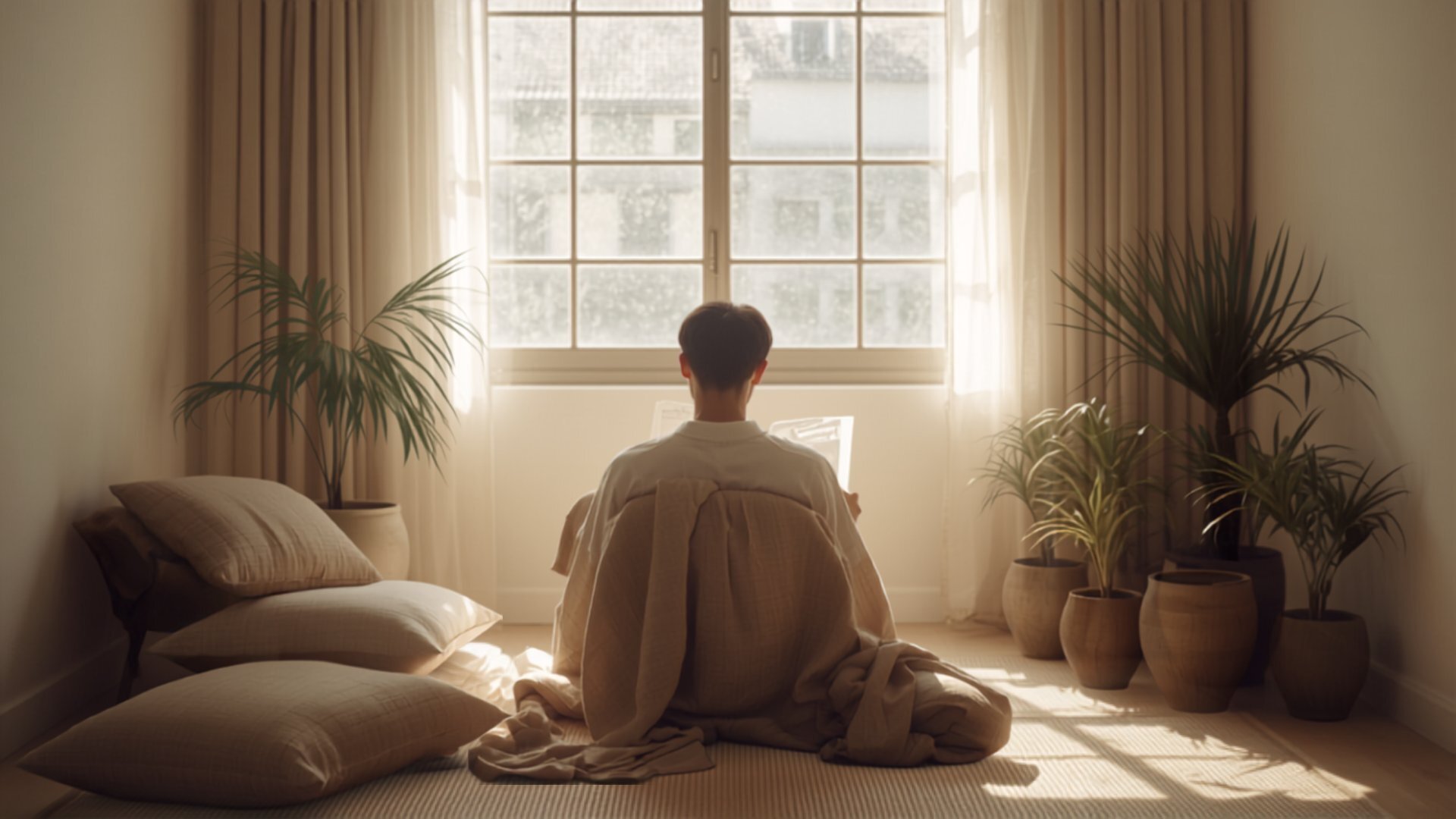
Come home on a heavy Singapore evening, the city still humming behind you, and a calm home announces itself before you have switched on a light. The air feels uncluttered. Surfaces are clear. Nothing in the room is asking for anything. That feeling is not an accident or a matter of expensive taste—it is the result of a handful of decisions, made early and held to. This is a field guide to designing a calm home in Singapore, the Japandi way.
Japandi joins the warmth of Scandinavian living to the restraint of Japanese design, and the meeting point is calm. Not cold, not bare—calm. In our climate and our compact homes, that is worth designing for deliberately.
How to design a calm home in Singapore: start by subtracting
Calm begins with what you leave out. Before adding a single piece, decide what the room can live without. The Japanese idea of ma—the active, considered space between things—is the quiet engine of a calm home. A clear wall, an empty stretch of counter, a little air around a chair: these are not gaps to be filled but features to be protected.
In practice, subtraction means built-in storage that hides the everyday, so the open surfaces can stay open. A calm home is not one with less stuff—it is one where the stuff has somewhere to go.
The field-guide essentials
A few principles carry most of the work. None of them are expensive; all of them require discipline:
- One material story. Choose a single warm timber tone and let it run through the home. Repetition is restful; variety is busy.
- A quiet palette. Soft, muted neutrals on the walls and cabinetry. Save colour for the few natural things—a plant, a clay bowl, the grain of the wood itself.
- Low and grounded. Lower furniture and floating cabinetry keep sightlines long and rooms feeling larger, which matters in a flat.
- Warm, layered light. Trade one bright ceiling light for several low, warm sources. Light sets the temperature of a room more than any object in it.
- Handle texture, not clutter. Linen, matte timber, unglazed ceramic. Calm is not flat—it is texture without noise.

Letting the cabinetry do the quiet work
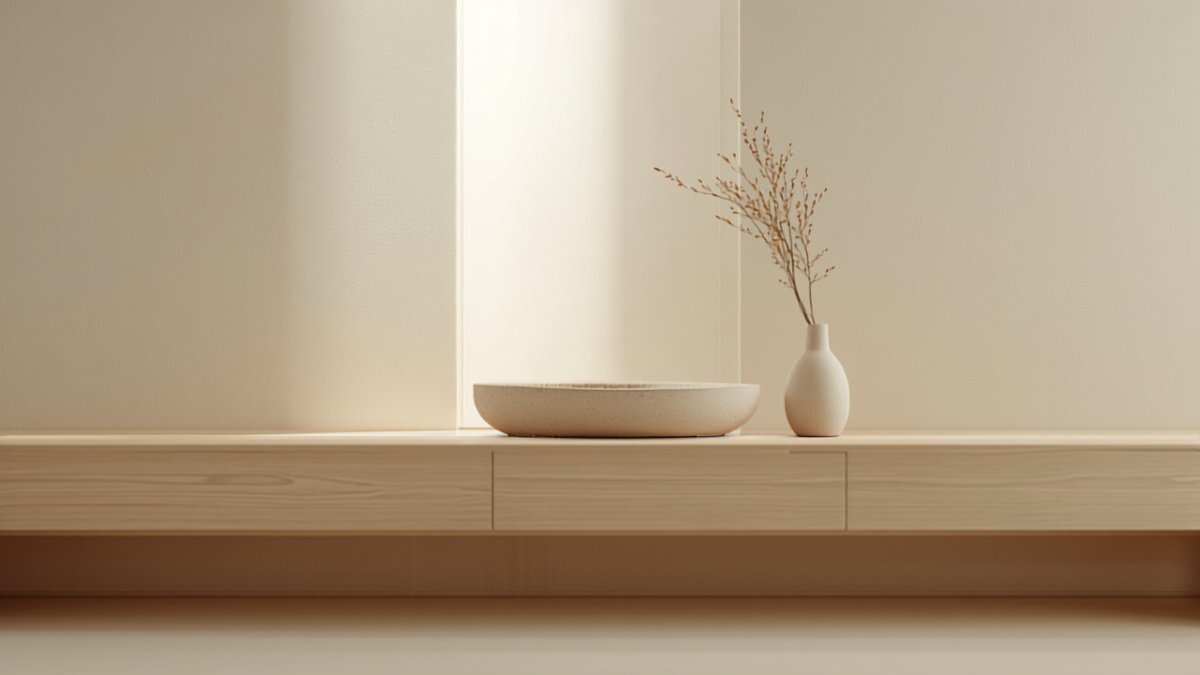
Most of the calm in a Japandi home is held by its built-ins. Handleless fronts, full-height storage matched to the wall colour, and a consistent grain turn cabinetry into architecture—present, useful, and almost invisible. Our Shuno modular range was made for exactly this: quiet storage that absorbs the clutter of daily life so the rooms around it can stay open and unhurried.
Begin with one room. Clear it back, protect a little emptiness, settle on a single timber and a soft palette, and let the storage carry what the surfaces should not. A calm home in Singapore is not bought in a weekend—it is designed by deciding, again and again, what to leave out. Do that with care, and the home gives the feeling back to you every time you walk through the door.