
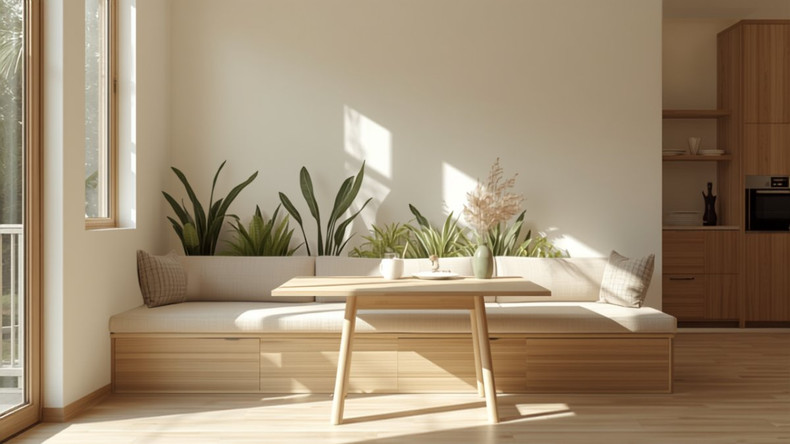
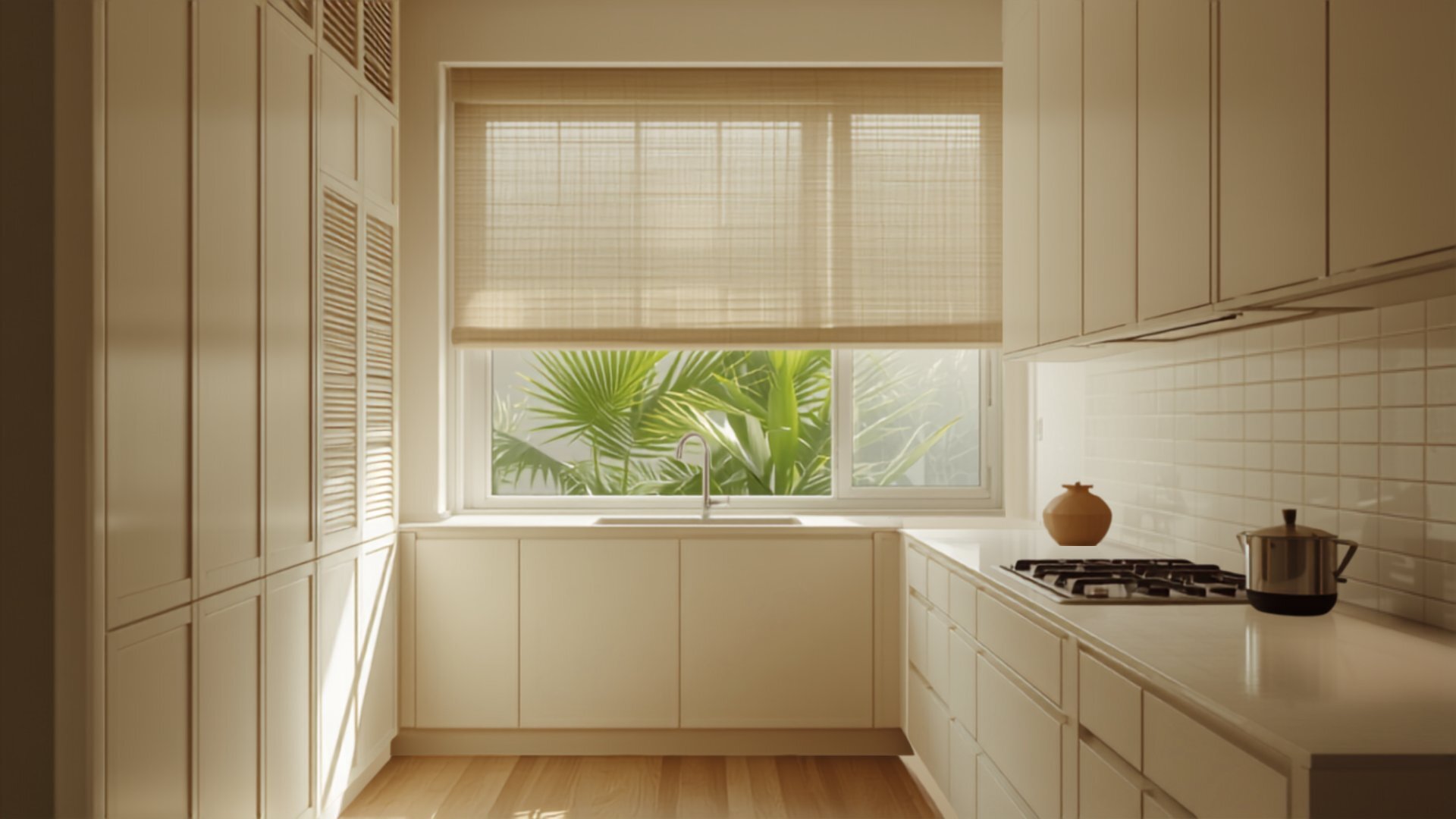
A workshop in Senai, mid-morning. Sawdust hangs in the light, sweet and warm. Somewhere a drawer runs open, then closes on itself with a soft breath. This is where the search for good carpentry in Johor Bahru begins — not in a showroom, but in the room where the work is actually made.
If you live in Singapore and are building across the Causeway, or you have a home in Iskandar Puteri, the maths is tempting. Carpentry in Johor Bahru can cost noticeably less than the same brief in Singapore, and the craft can be every bit as good. But the gap between a fitter and a maker is real, and the Japandi brief — light wood, handleless fronts, near-invisible joins — punishes shortcuts that a busier style would hide.
Here is an honest shortlist. What to look for, what to walk away from, and how a quiet specification changes the conversation.
The workshop visit tells you almost everything
Ask to see the workshop. Not the showroom — the workshop.
A maker who owns their fabrication will show you the floor without hesitation. You want to see carcasses being built, edges being banded, fronts being aligned. You are looking for order: offcuts sorted, boards stored flat and dry, machinery that is used rather than displayed. A tidy floor is not decoration. It is the difference between a cabinet that lands square and one that fights the wall for years.
Be wary of any partner who only ever meets you in a rented gallery and outsources the actual building to a workshop you never see. When something goes wrong at that distance, there is no one in the room to answer for it.
Carcass material comes before finish
Most buyers judge a cabinet by its door. The door is the last thing that matters.
The carcass — the box behind the front — is what holds the home together across a decade of humidity. In our climate, this is not a small point. Ask what the carcass is made from, and ask specifically about the wet zones: under the sink, beside the hob, the base of a wardrobe against an external wall.
You want moisture-resistant board where water lives, and a low-formaldehyde grade throughout for the air you breathe at home. If a quote is unusually cheap, the saving is almost always hidden here, in the box you cannot see. We have written more on this in our guide to which cabinet material survives Singapore's 90% humidity, and the same physics applies in Johor.
Alignment tolerance is the quiet test
Run your eye along a row of drawer fronts. Then along the gaps between them.
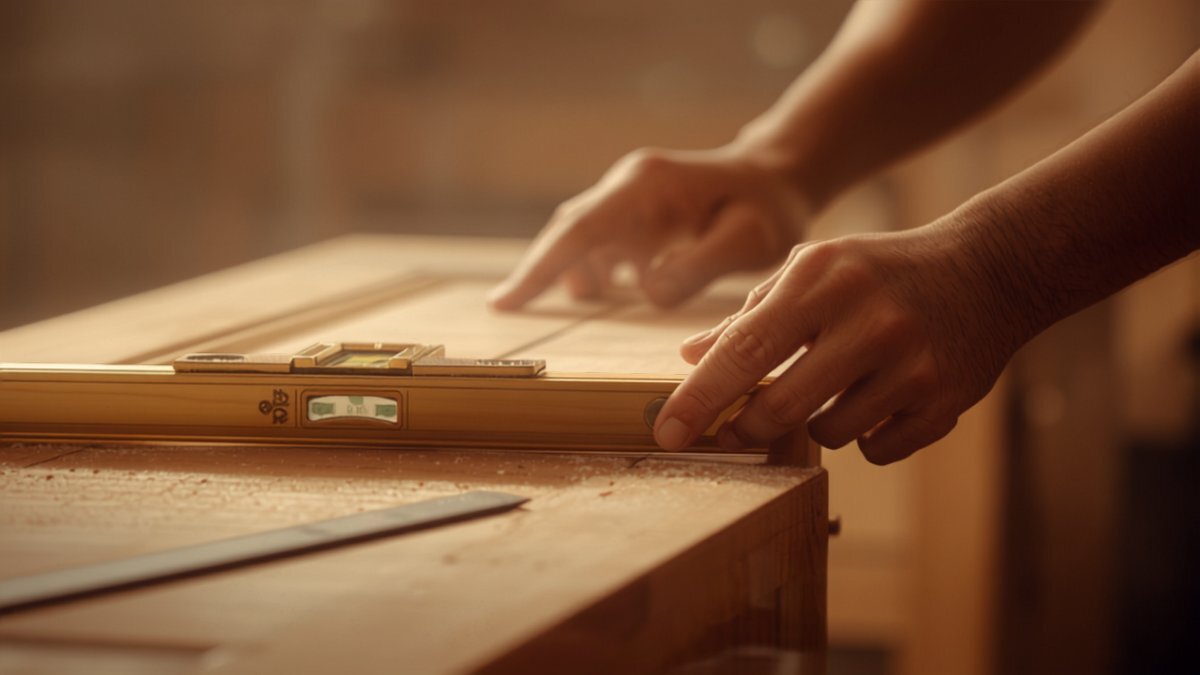
Good carpentry holds a consistent reveal — the shadow line between fronts — from one end of a run to the other. In a Japandi kitchen, where there are no handles to distract the eye and the wood grain runs unbroken, a wandering gap is the first thing you notice and the last thing you forgive. We work to a tolerance under 1mm on hinge and drawer alignment, and it is worth asking any partner what they hold themselves to.
Bring a spirit level to the workshop if you like. A maker who is proud of their alignment will hand you one first.
Finish quality, in raking light
Ask to see a finished panel by a window, in daylight raking across the surface.
This is where a spray finish shows its honesty — or its orange peel, its dust nibs, its uneven sheen. Matte and low-sheen finishes, central to the Japandi look, are less forgiving than gloss because they hide nothing. Run your palm across a door. It should feel like one continuous surface, edge to face, with the edge banding so cleanly done you have to search for the seam.
Lead time, told straight
A realistic lead time for bespoke carpentry is measured in weeks, not days.
Be cautious of anyone who promises a full home in an implausibly short window; corners get cut in the drying and the alignment, and you inherit them. Equally, ask how cross-border logistics are handled — customs, delivery scheduling, and who is responsible if a piece is damaged in transit from Johor to your Singapore address. A grounded partner will give you dates and own them, in ringgit and in plain terms. Expect a considered kitchen to sit somewhere from the low tens of thousands of RM, and treat a figure far below the field as a question, not a bargain.
Aftercare, and who answers the phone
A hinge will loosen. A home will settle. A drawer, one day, will need a small adjustment.
The question is who returns to make it right, and whether they still exist in two years. Ask about the warranty on the carcass — the structure, not just the surface — and ask how service calls are handled across the border. A three-generation workshop with a fixed address is a different proposition from a broker who reassembles a new crew for every job.
How the Japandi brief changes carpentry in Johor Bahru
Everything above tightens under a Japandi specification.
Handleless fronts demand precise push-catch or J-pull detailing. Continuous grain across a run means panels must be cut and sequenced from the same boards, not grabbed at random. Light oak and pale ash show every fingerprint of poor sanding. Restraint, it turns out, is harder to build than ornament, because there is nowhere for a mistake to hide. This is why the shortlist matters more here than in a busier style.
Arimokko builds from a workshop in Senai, minutes from the Johor side of the crossing, with in-house design and fabrication and a three-generation team. Our modular Japandi range, Shuno, was made for exactly this cross-border reality — considered wardrobes and storage on a lighter, faster brief, without the alignment being any less honest. You can read more about our approach on the About Arimokko page.
Choosing a carpenter is choosing who you trust with the quiet parts of your home. Take the workshop visit. Ask the plain questions. Then stand in the sawdust light, run a drawer, and listen for the soft close.
That sound is the whole answer.
Speak with our design team about your home — quietly, in person.